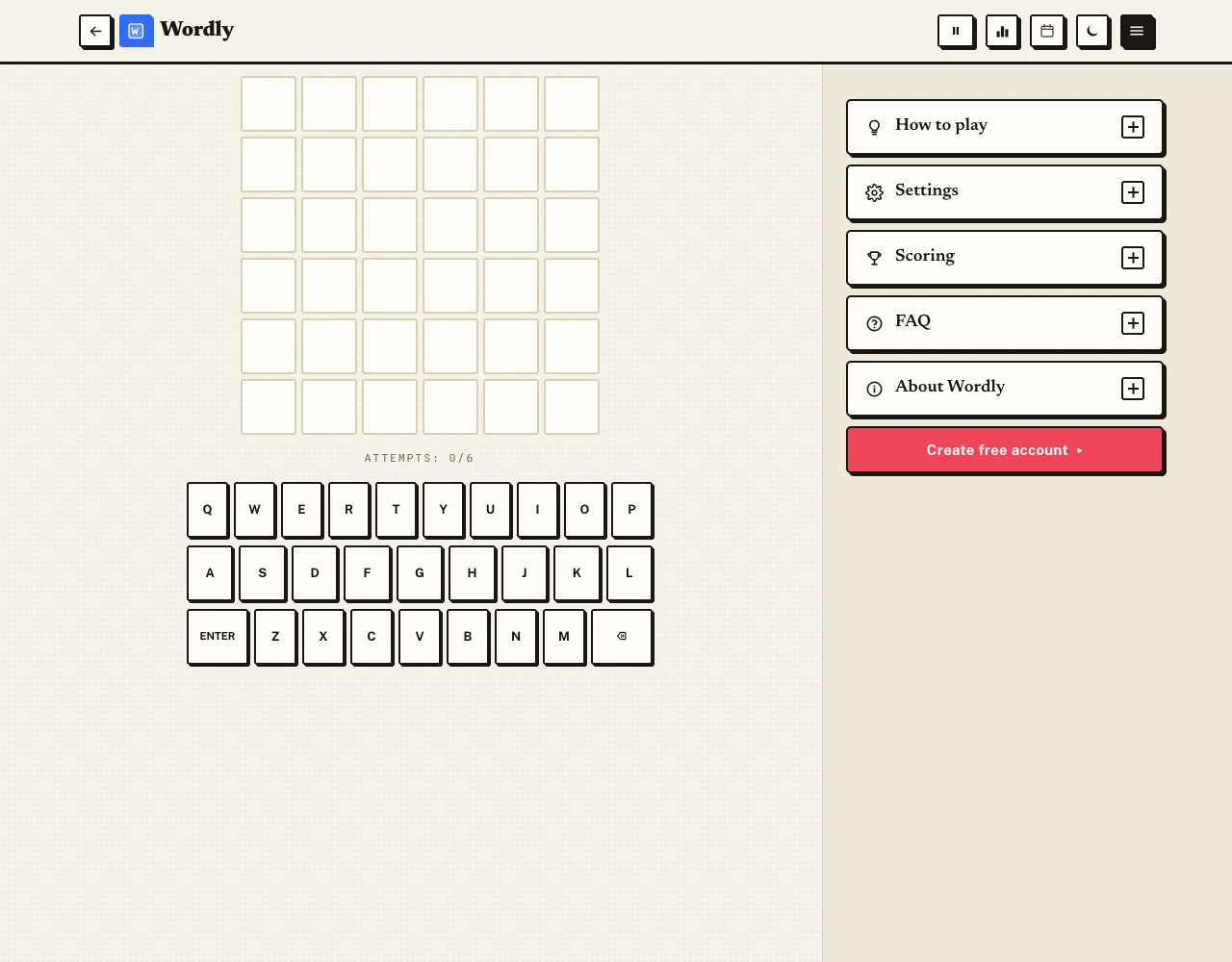
Wordly
Find a six-letter daily word in six guesses, with colored clues and an optional hard mode that enforces them.
Added
Browse other categories · All games
Find a six-letter daily word in six guesses, with colored clues and an optional hard mode that enforces them.
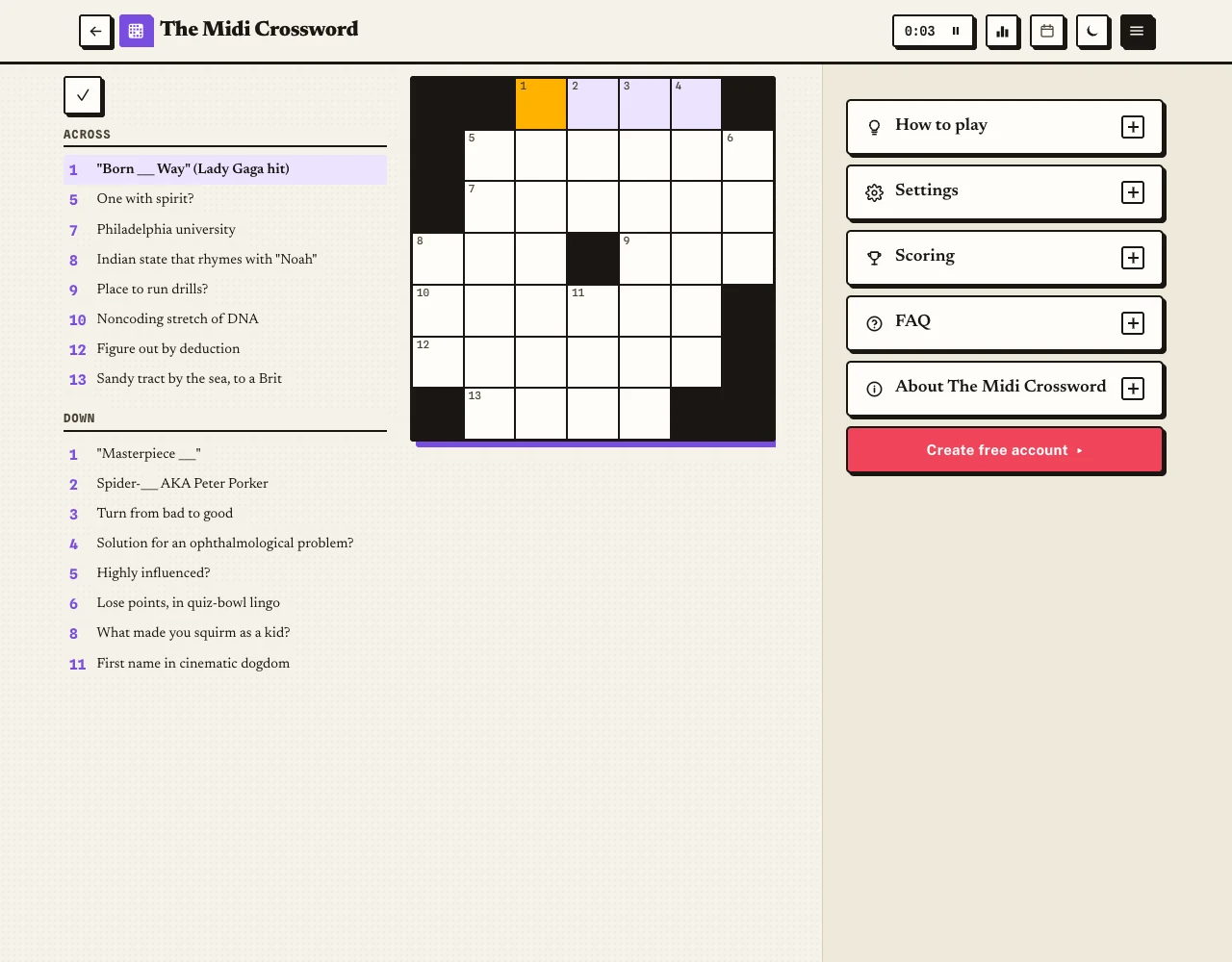
Solve a mid-sized daily crossword with intersecting clues, growing from weekday seven-square grids to a larger Sunday challenge.
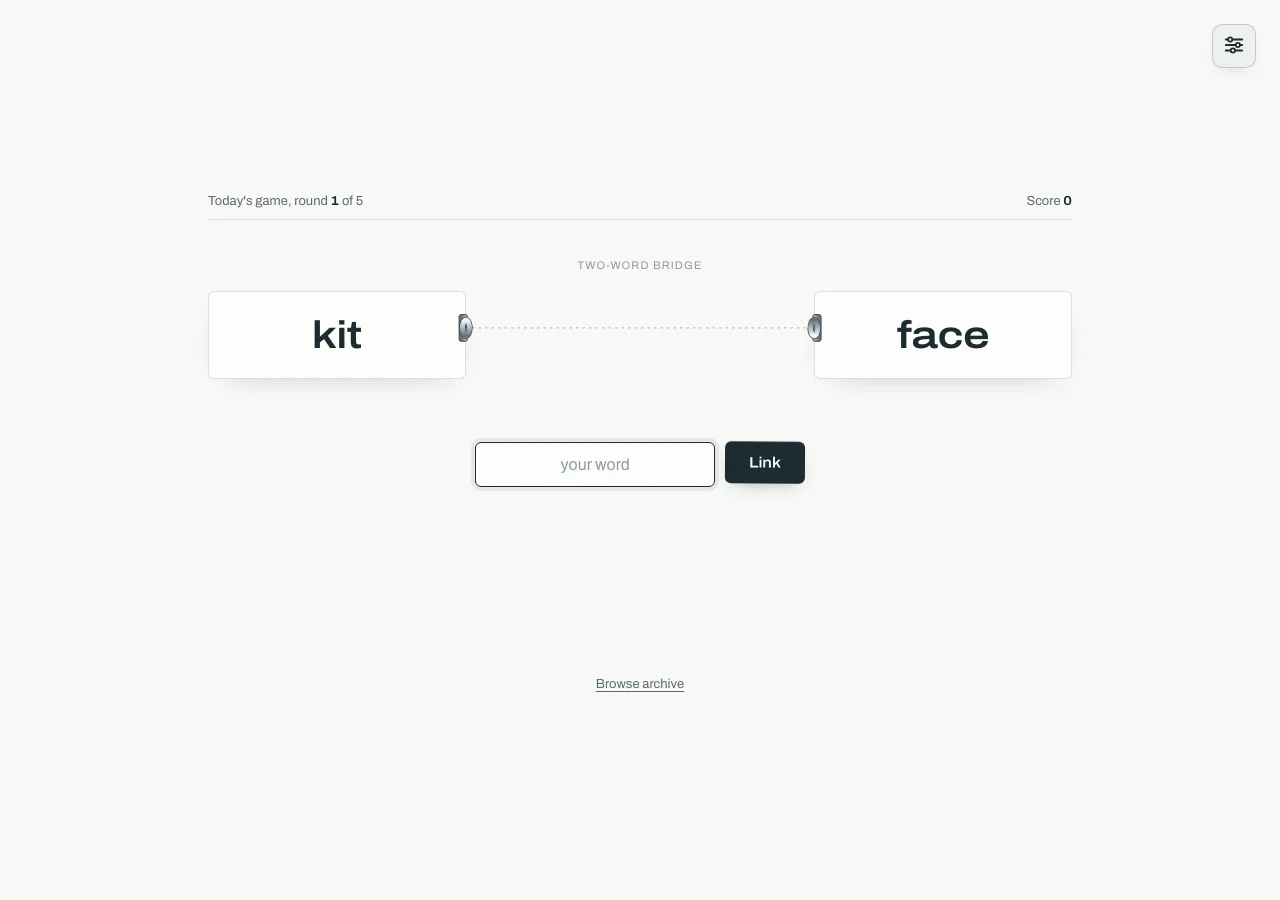
Find words that connect two or three clues by meaning, with one guess in each of five rounds and up to 5,000 points.
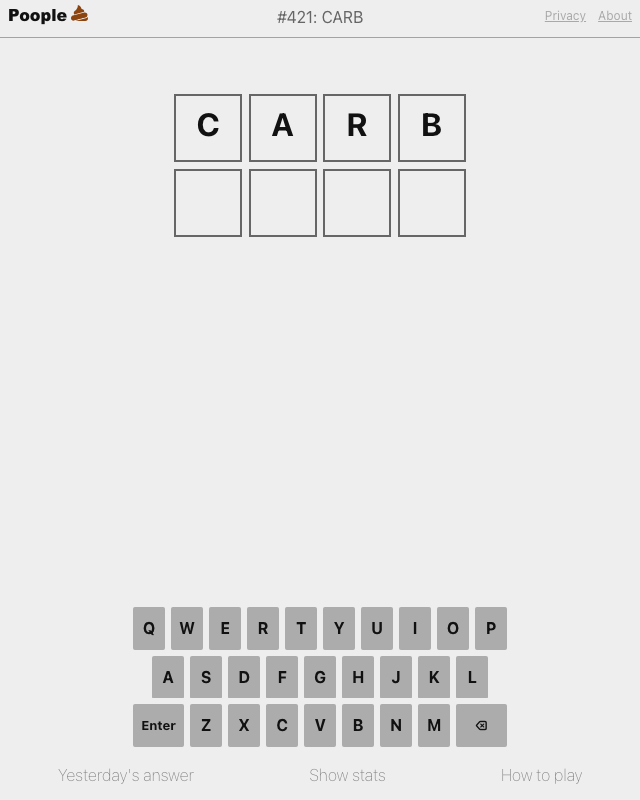
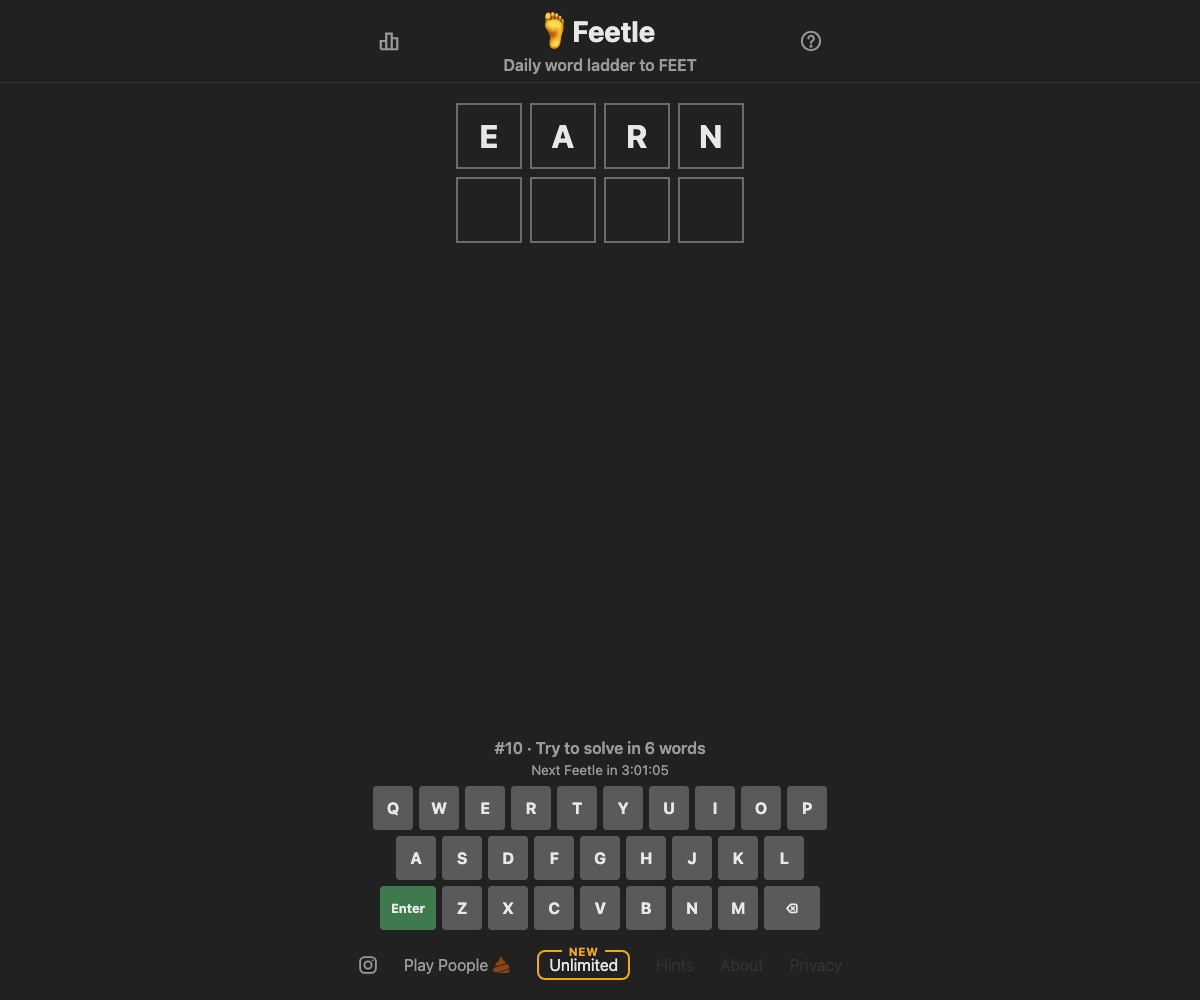
Turn a daily four-letter starting word into POOP, changing one letter per valid word and aiming for the shortest ladder.
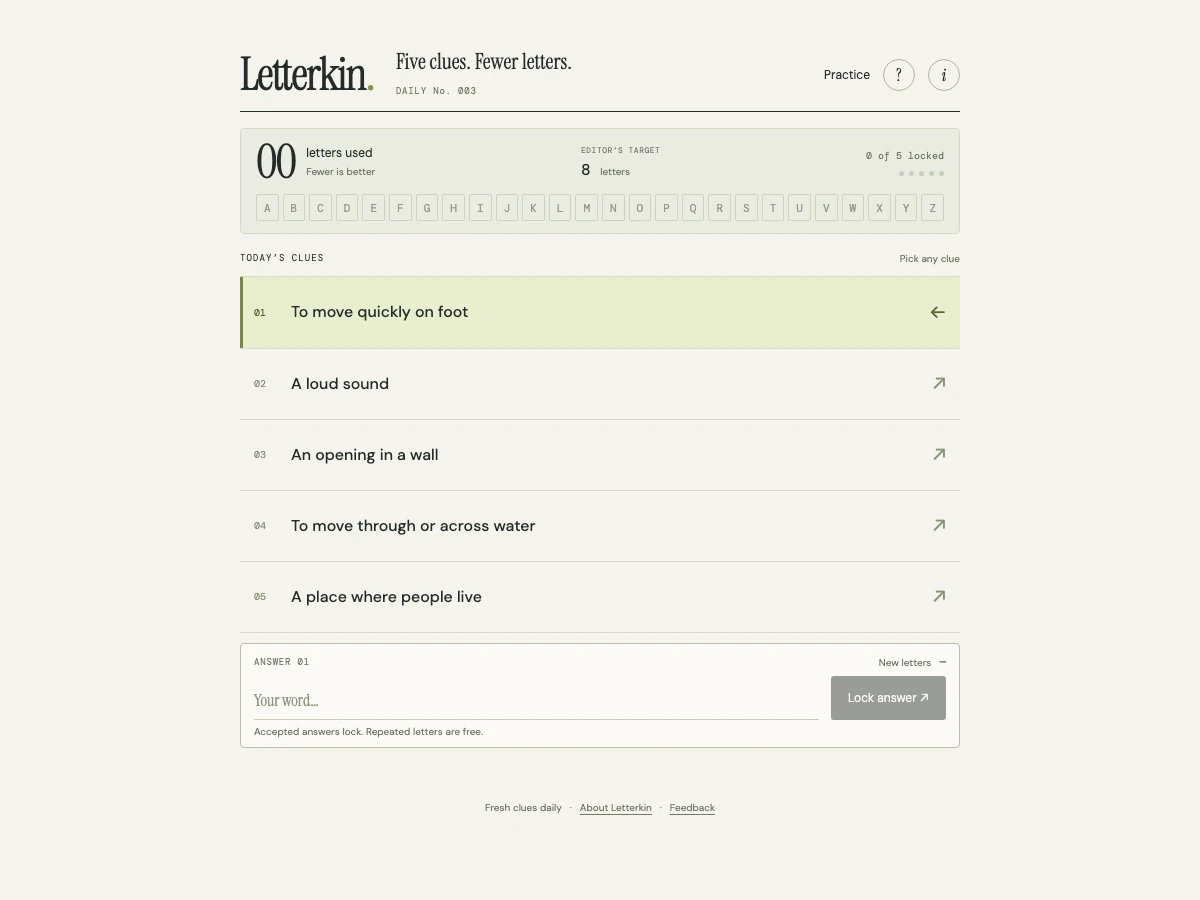
Answer five clues with as few different letters as possible, choosing words that reuse the alphabet you have already committed.
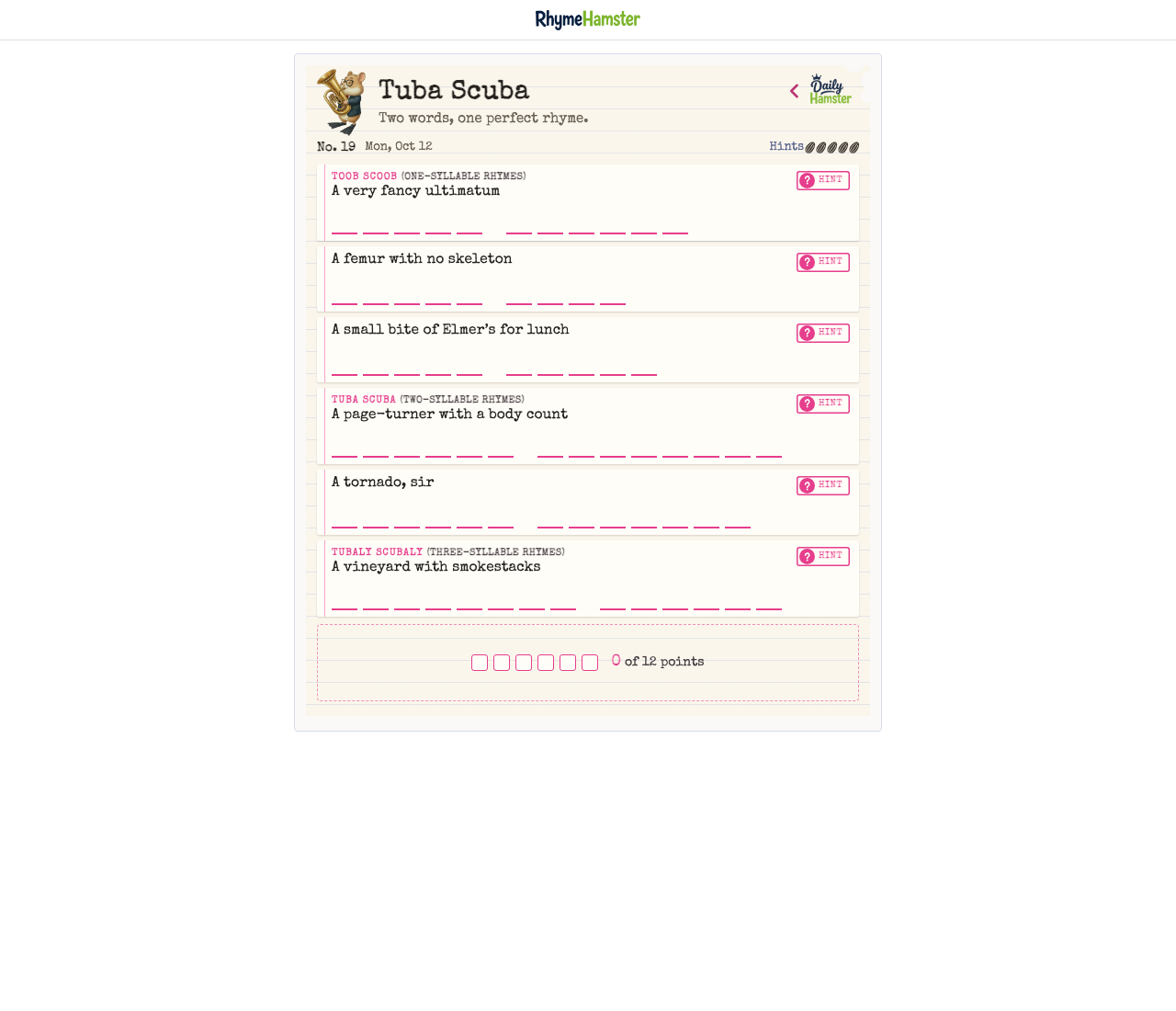
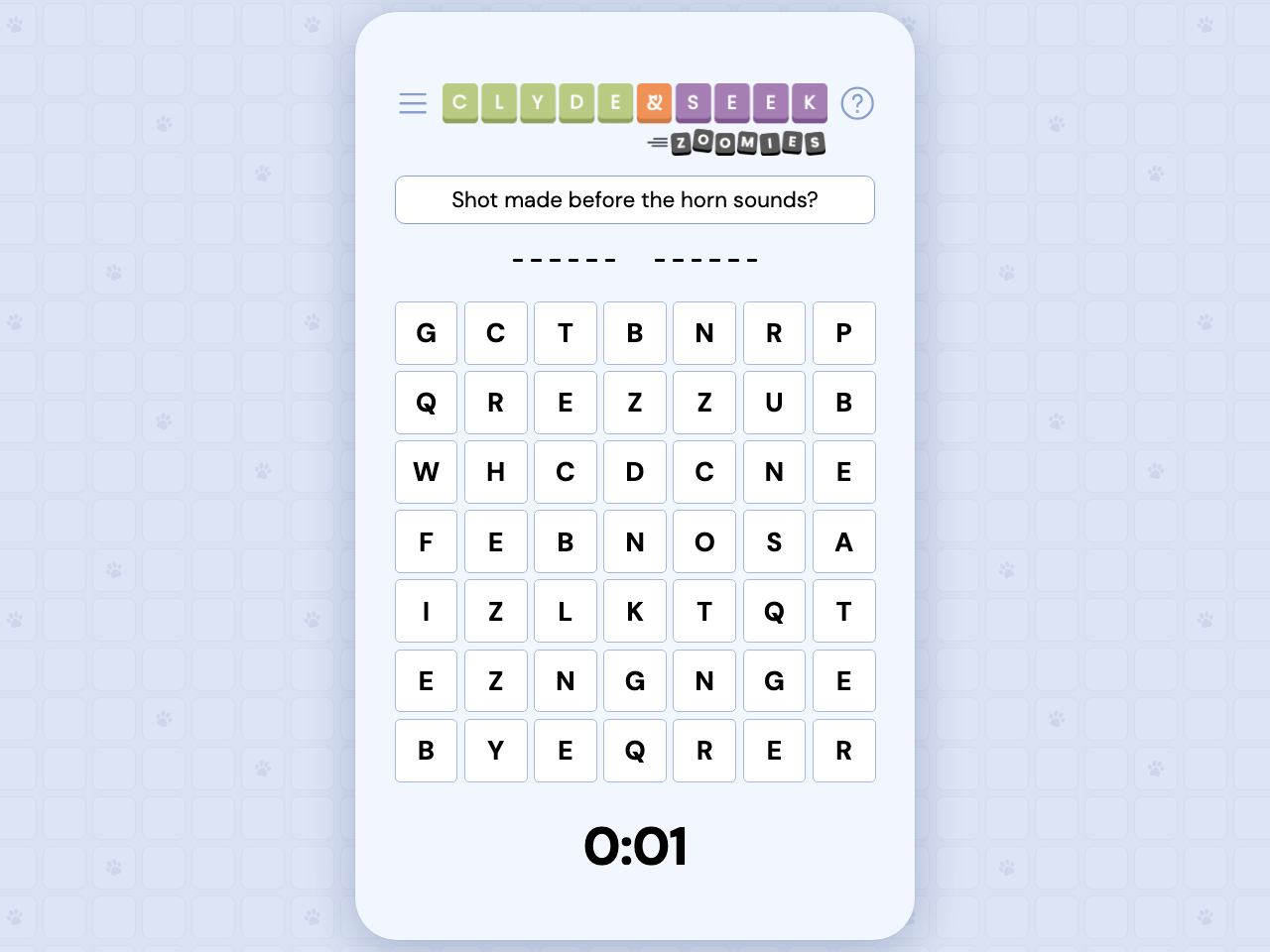
Solve playful rhyme clues in Daily Hamster, including six two-word riddles in Tuba Scuba.
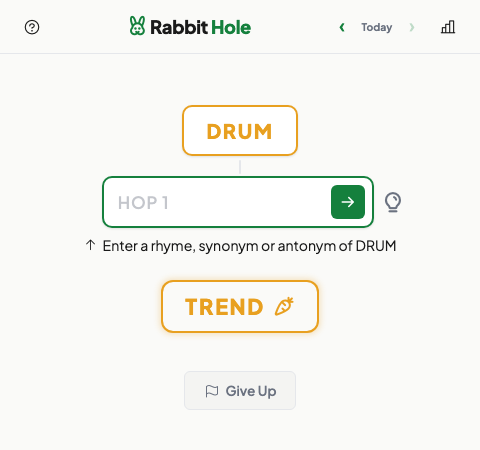
Build a route between two daily words using rhymes, synonyms and antonyms, choosing your own connections rather than changing one letter at a time.
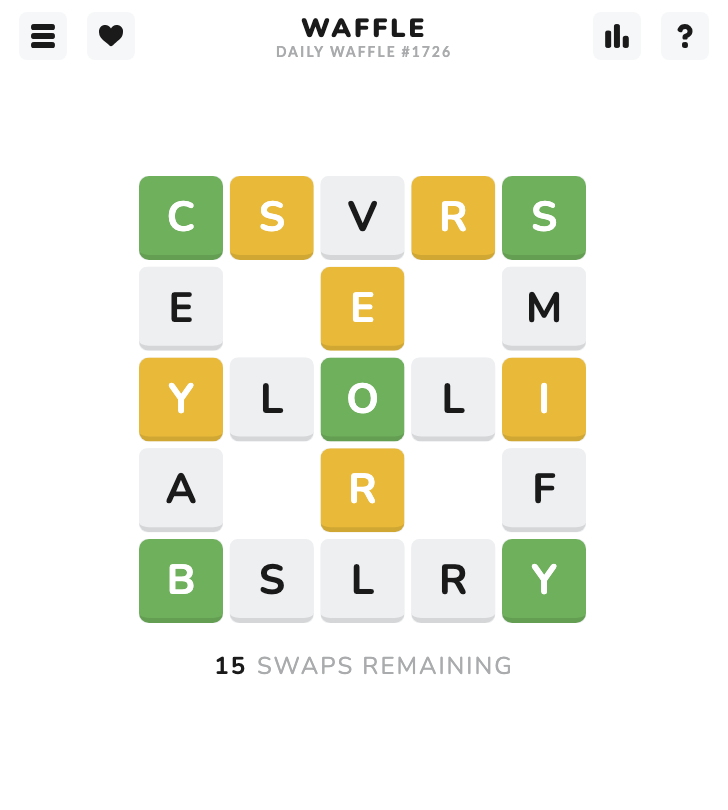
Swap the supplied letters into six crossing words, using color clues to finish with as many spare swaps as possible.
Fill four-letter patterns using a limited daily supply of letter tiles, saving useful letters for the words that come next.
Reveal words in a hidden Wikipedia article, follow the context they uncover, and work out its title.
Write a clever connection between two categories in 45 seconds, with five daily pairs and a score for each answer.
Find a hidden daily word through meaning-based ranks, with unlimited guesses rather than letter-position clues.
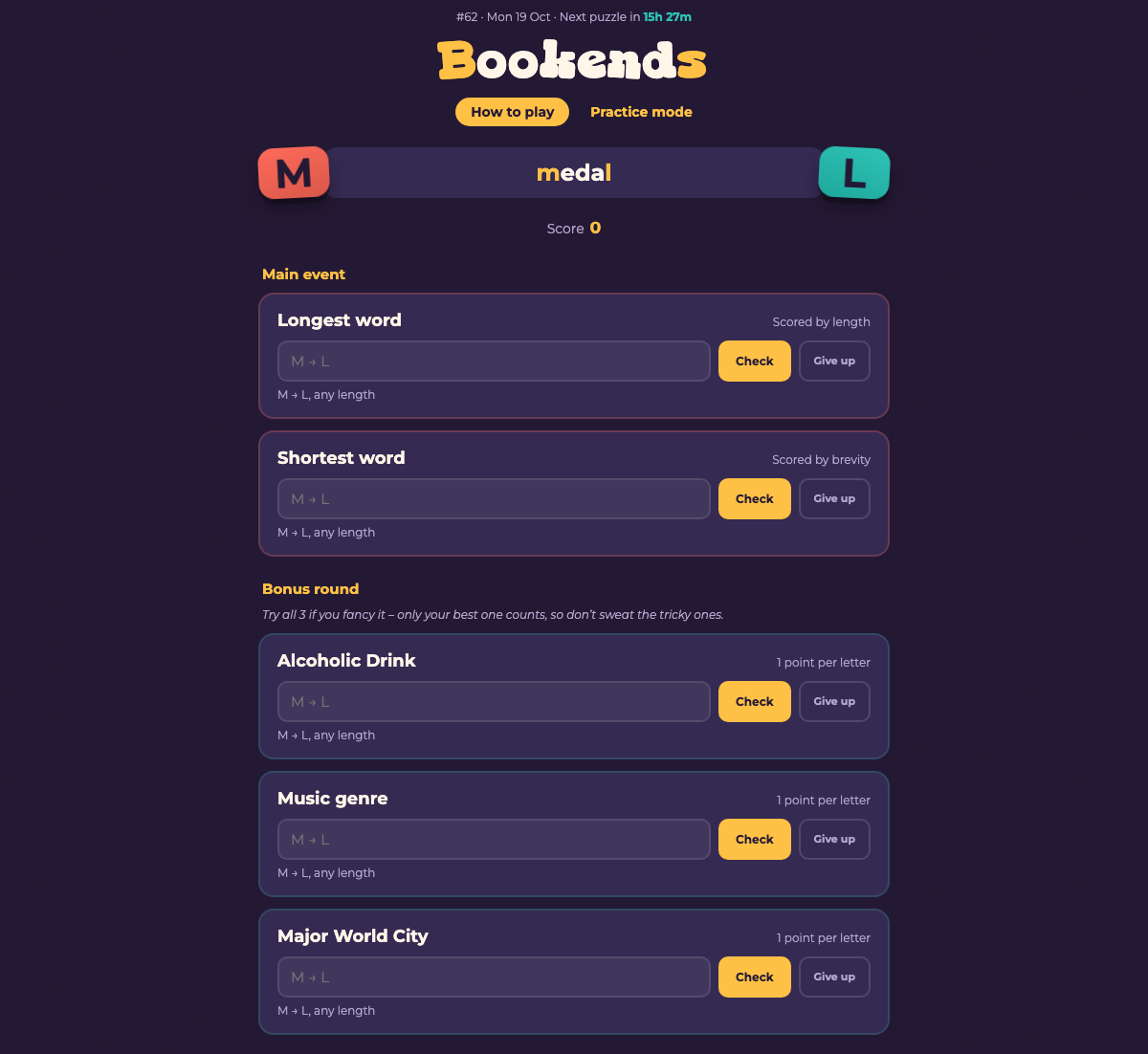
Use the same first and last letters to find a long word, a short word and an answer in a bonus category.
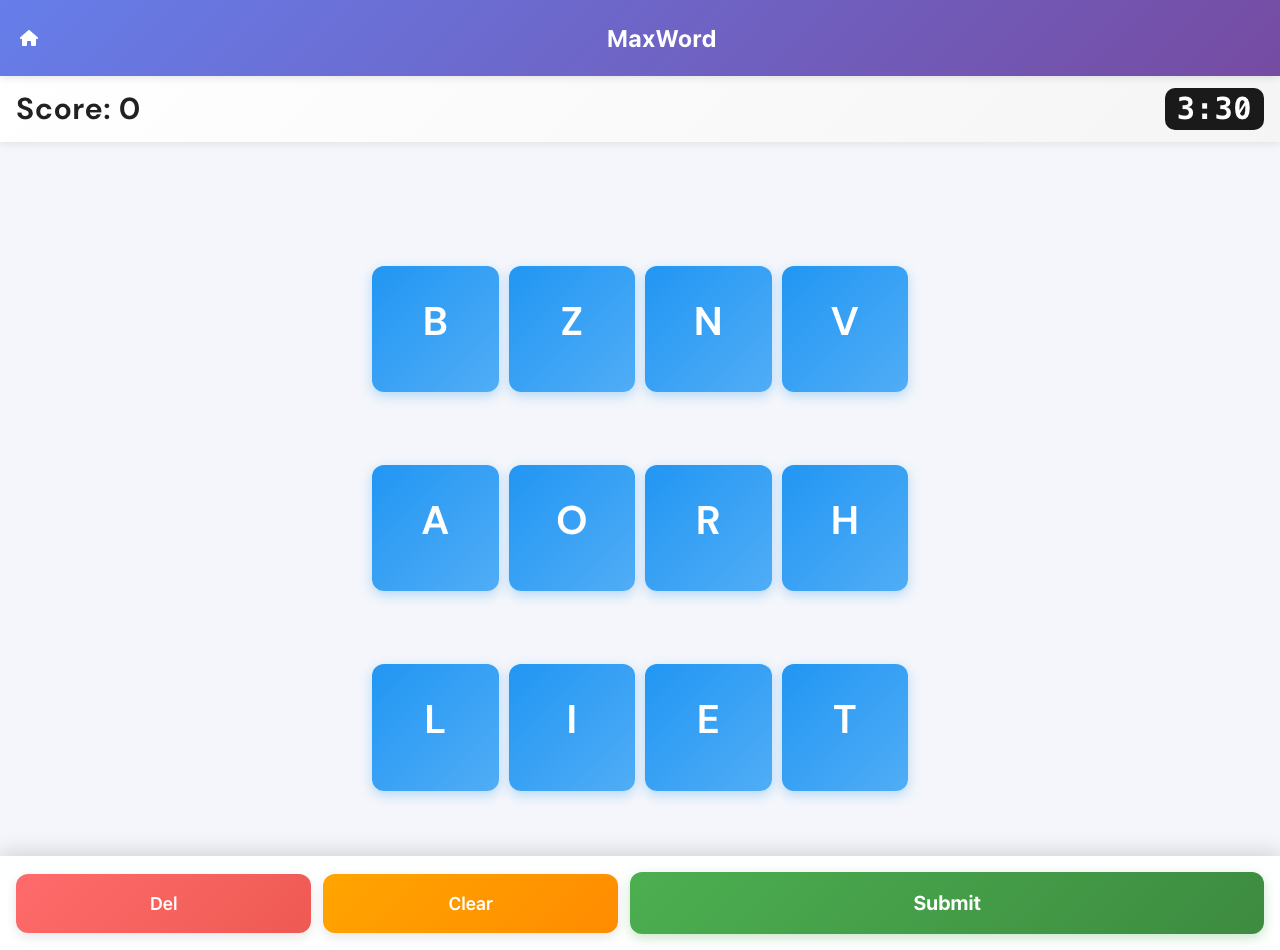
Make words from a changing board of twelve letters, clearing used tiles and chasing longer-word bonuses.
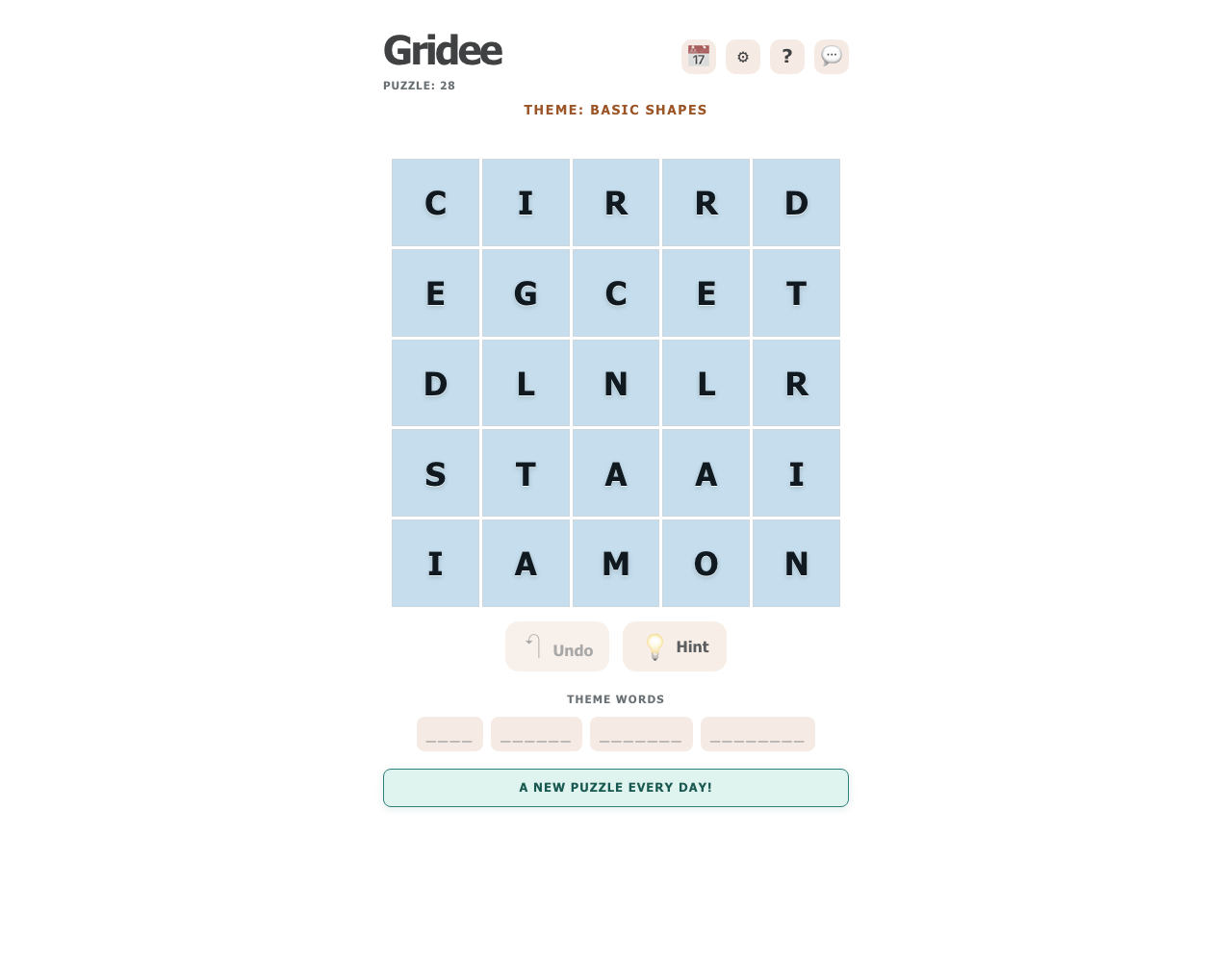
Find themed words in a daily letter grid, then watch the remaining letters fall into new positions.
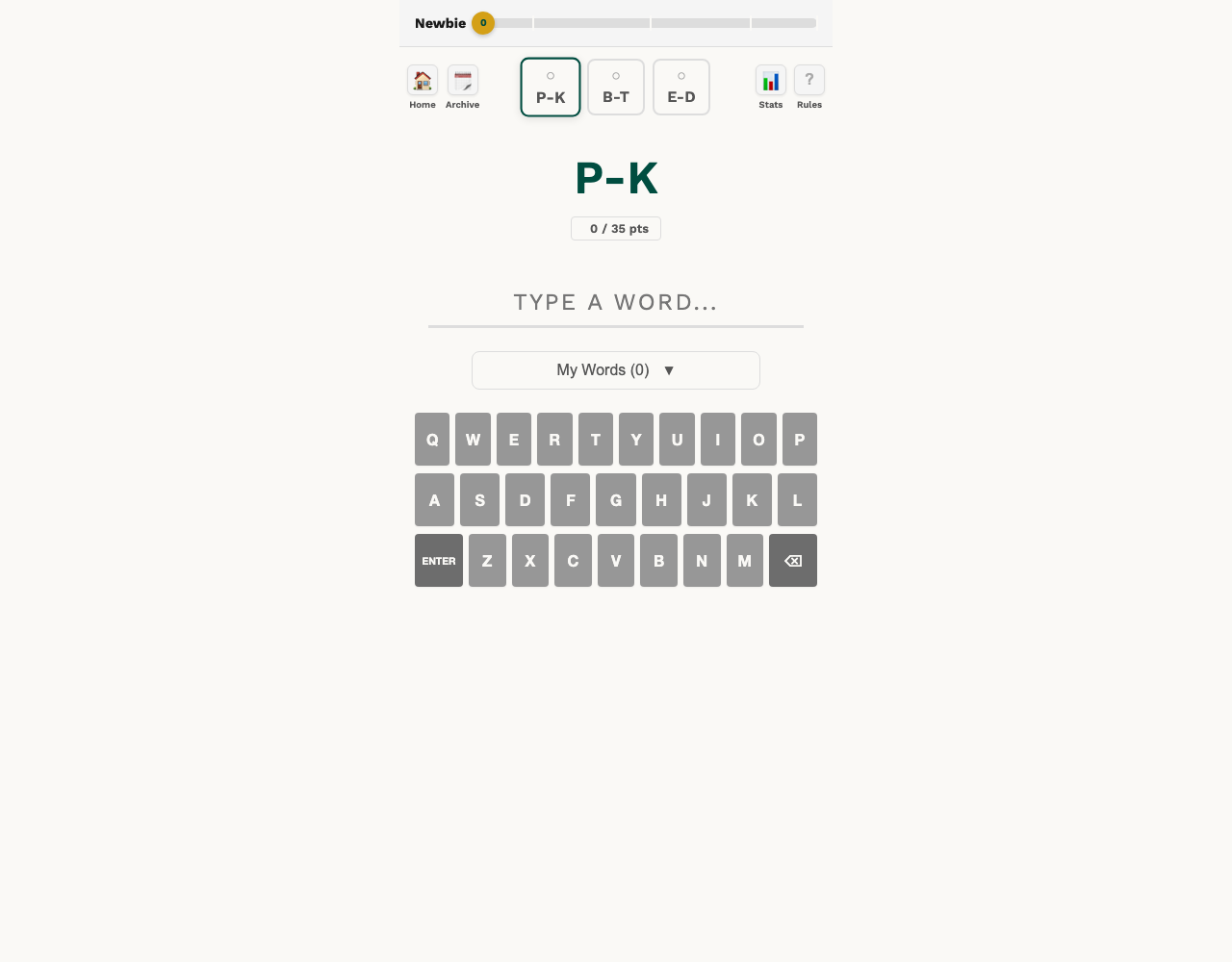
Make words that start and end with each daily letter pair, earning points across three rounds.
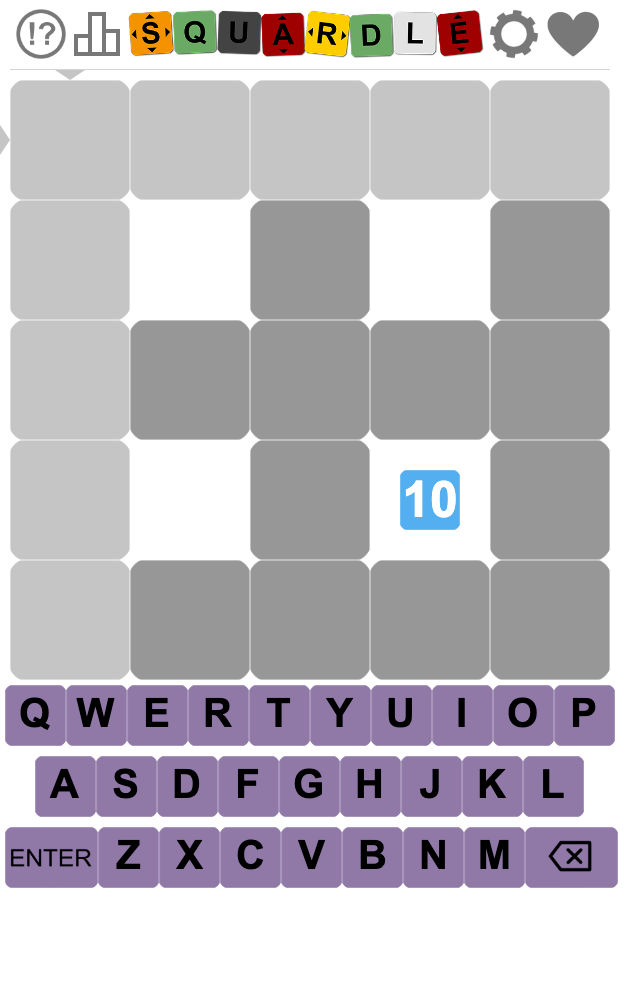
Guess five-letter words to solve a daily interlocking grid, using hints that distinguish rows from columns.
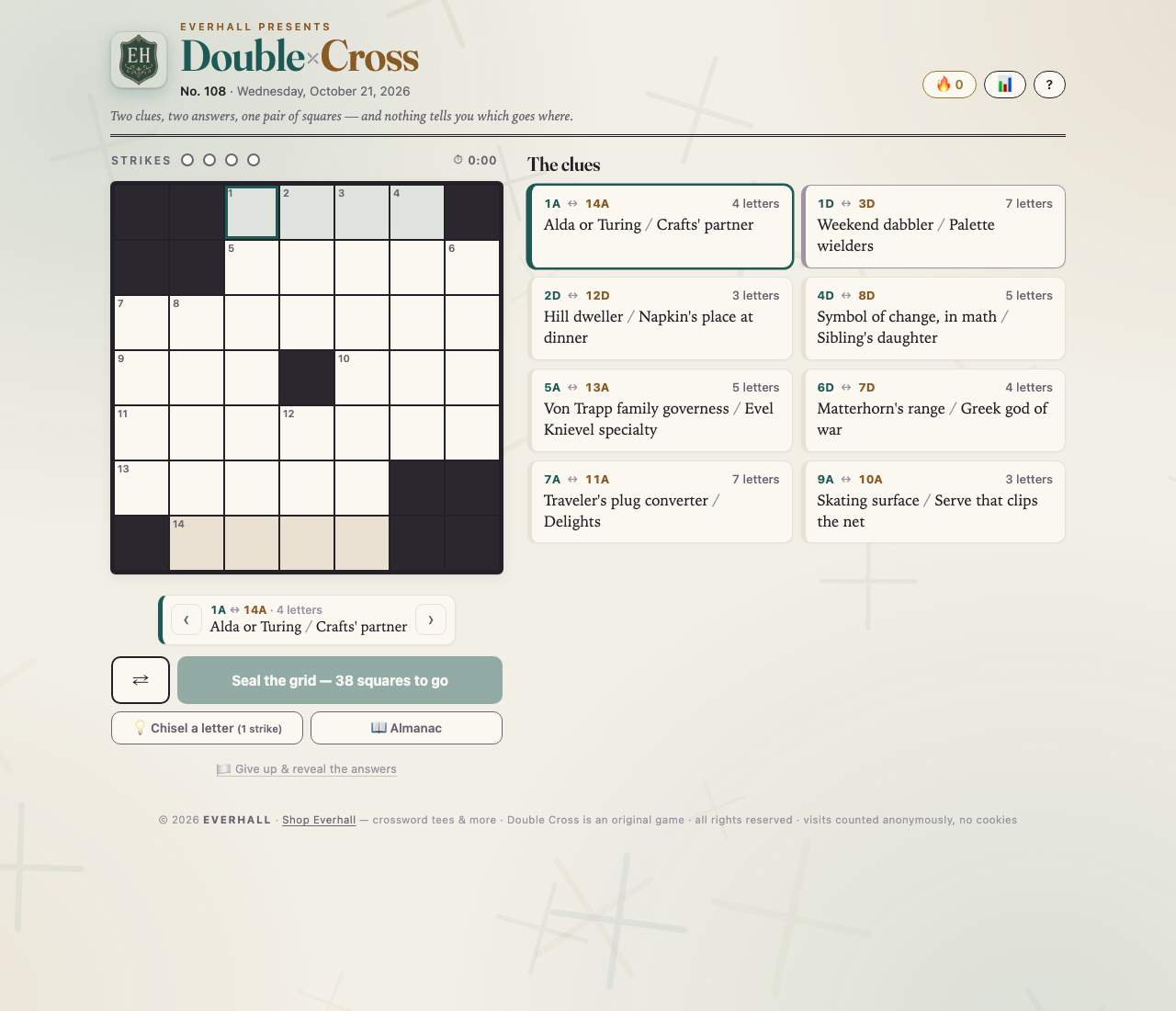
Solve paired clues, then use crossing letters to decide which answer belongs in each matching slot.
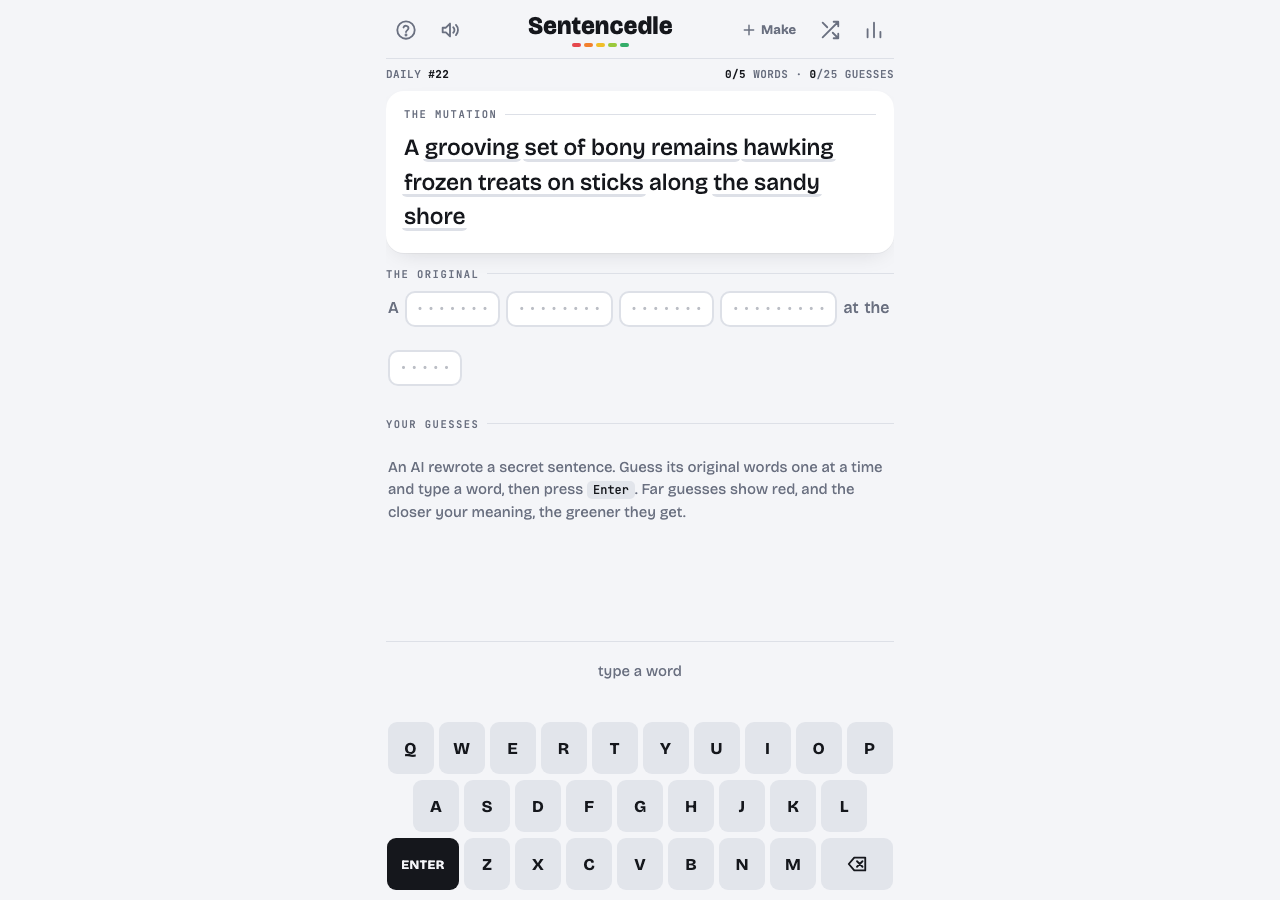
Recover five hidden words from an AI-rewritten sentence, using meaning-based feedback within 25 guesses.
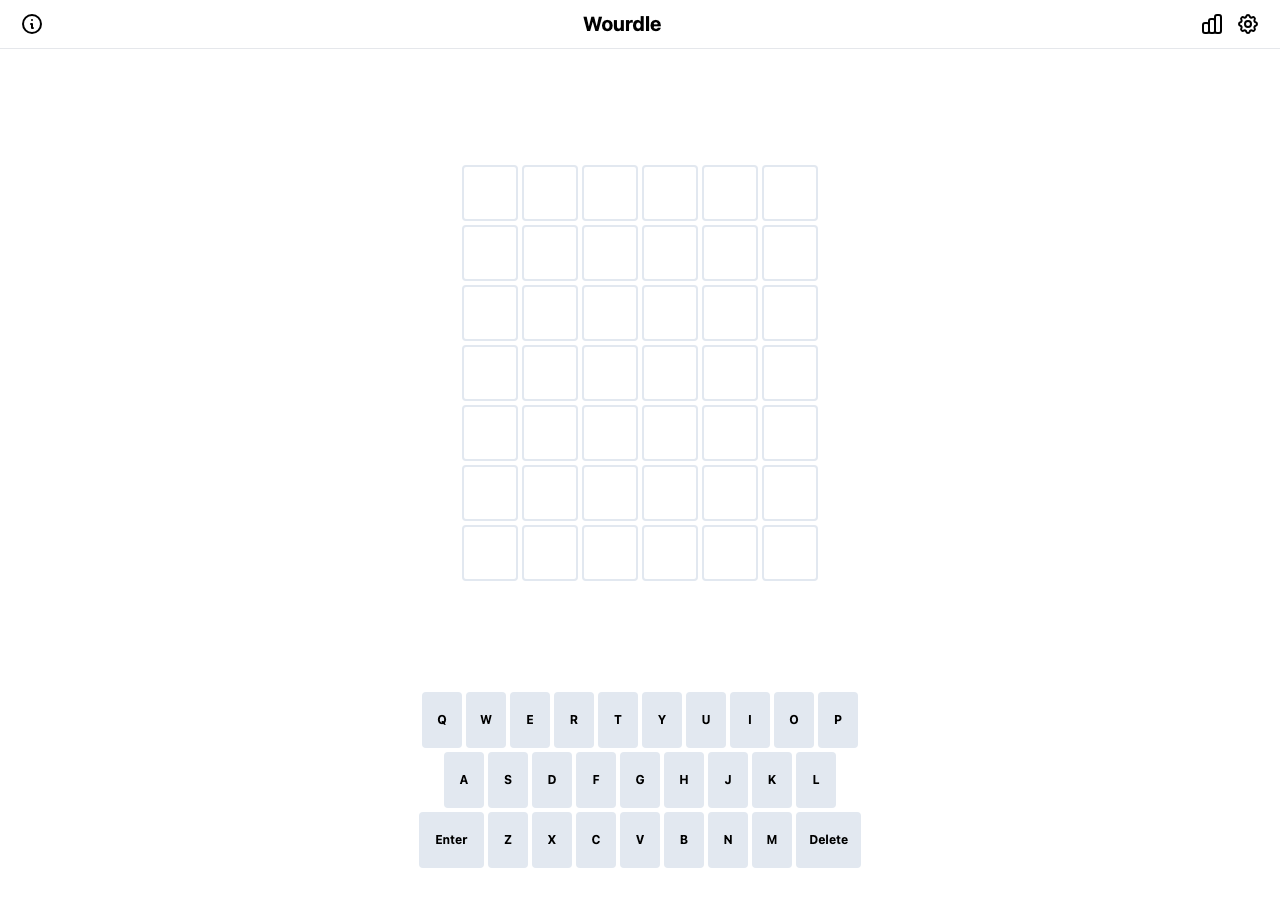
Find a six-letter word in seven tries, with British English spellings and colored letter feedback.
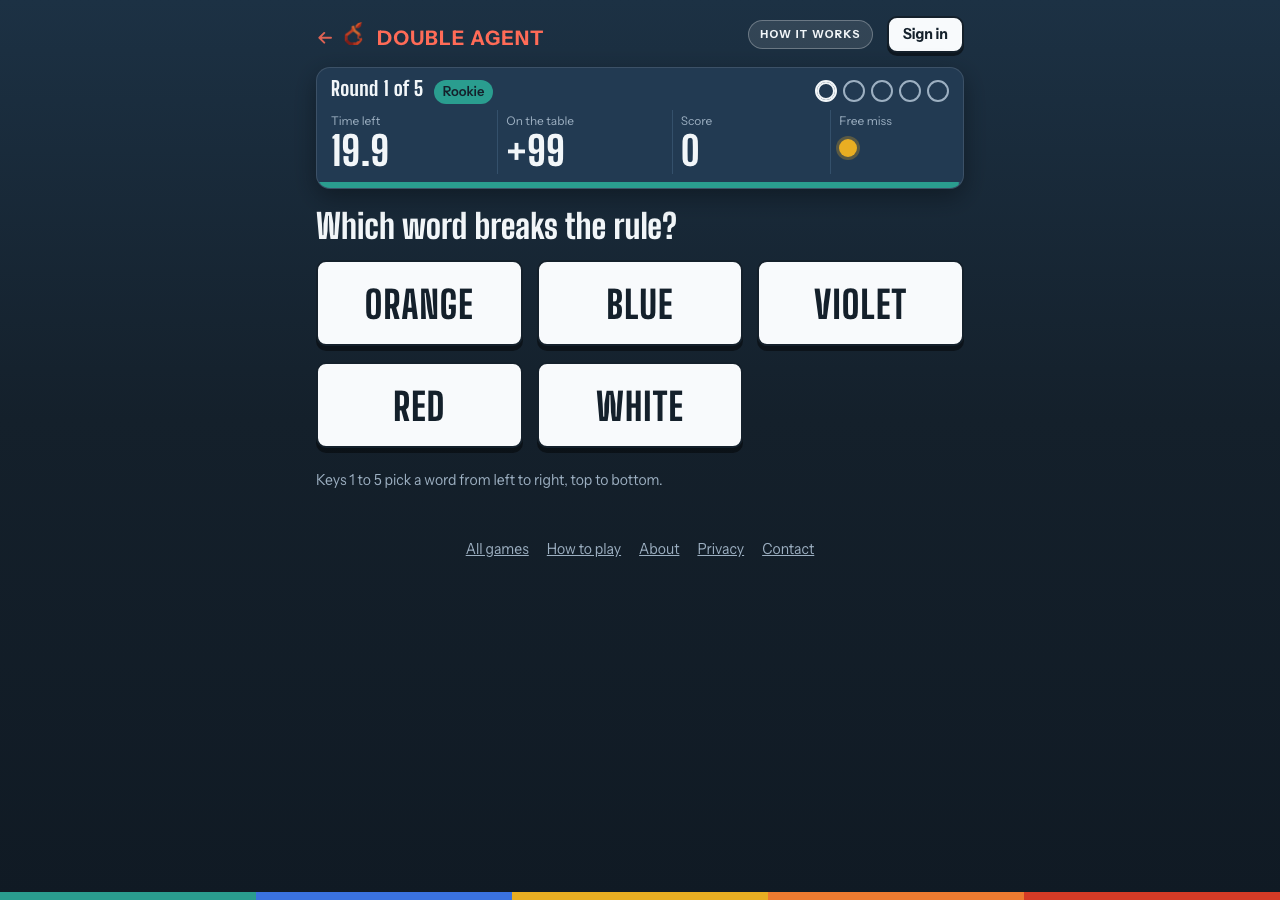
Pick the one word that breaks a hidden rule across five timed rounds, with speed affecting your score.
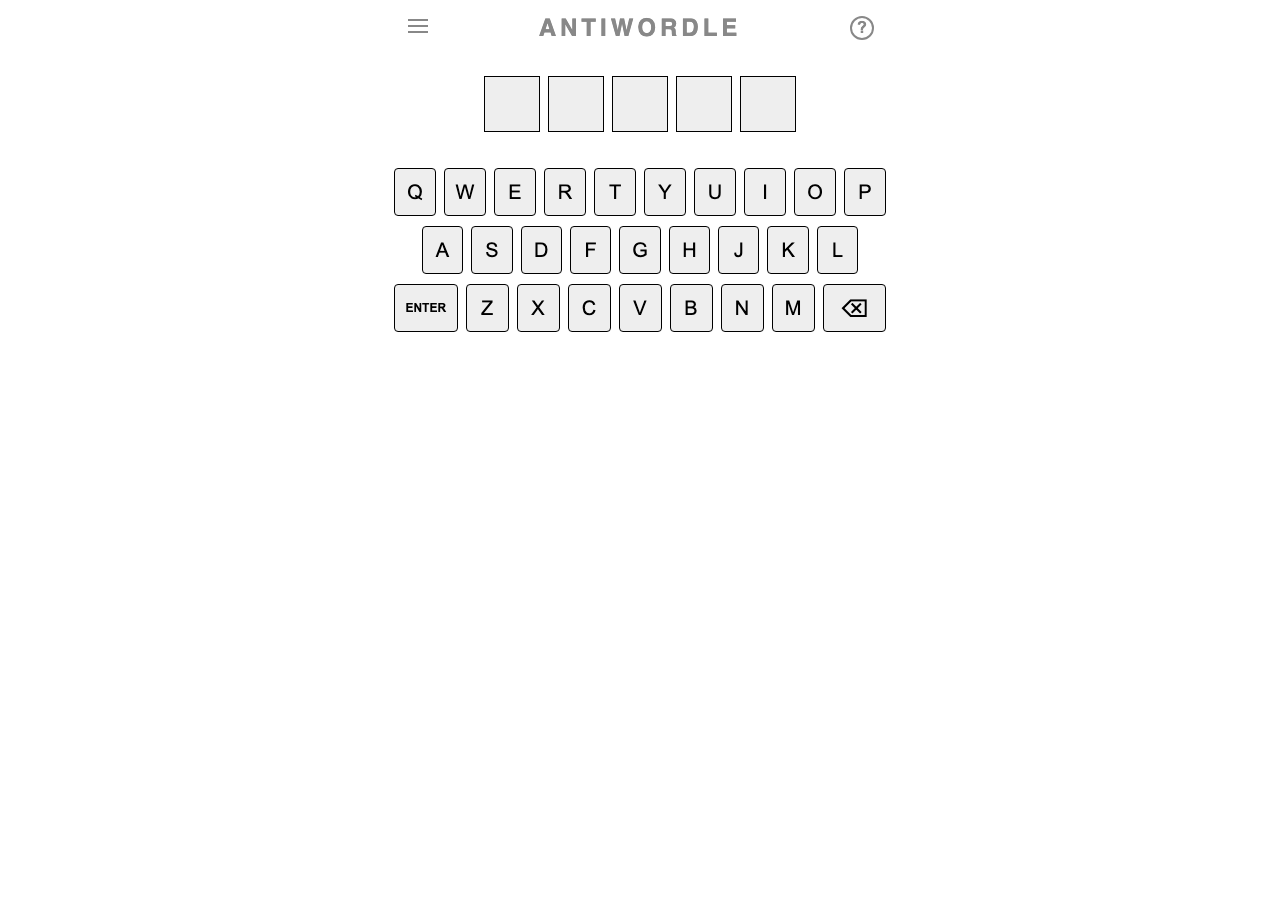
Keep a five-letter guessing game going: missing letters are banned, yellow letters are required and red letters stay fixed.
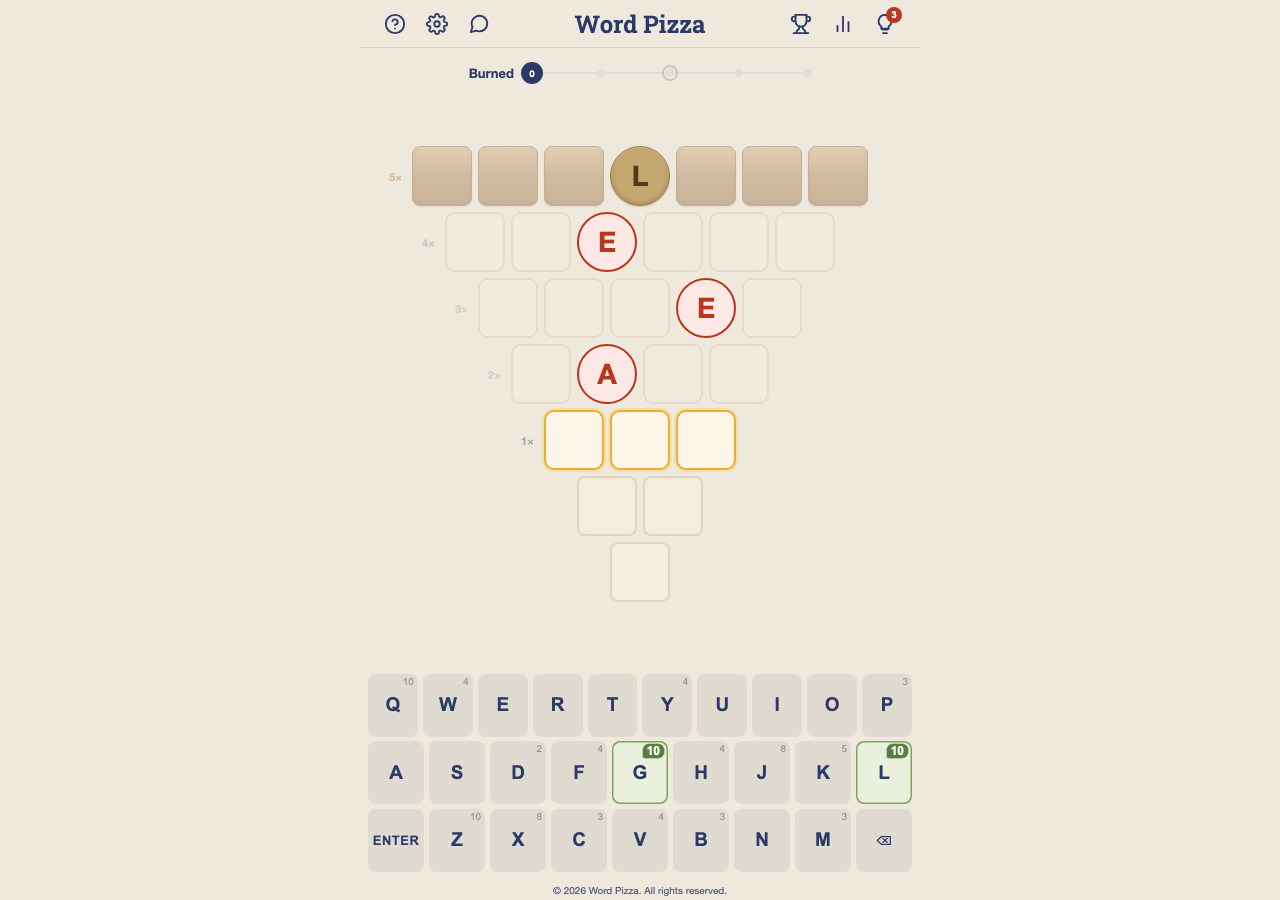
Build five linked words from three to seven letters around fixed letters, then score your pizza slice.
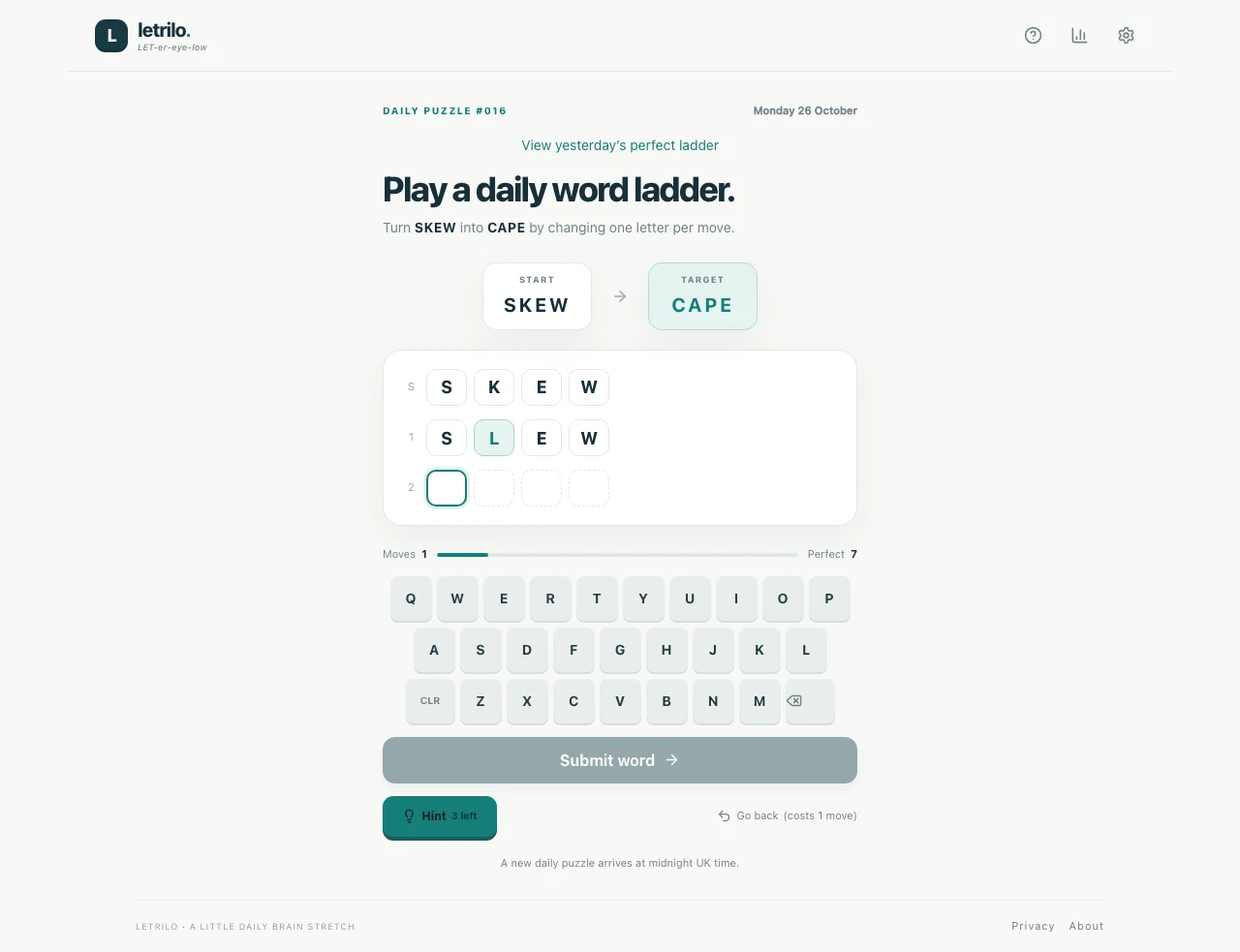
Build a four-letter word ladder, changing one letter at a time to reach the daily target.
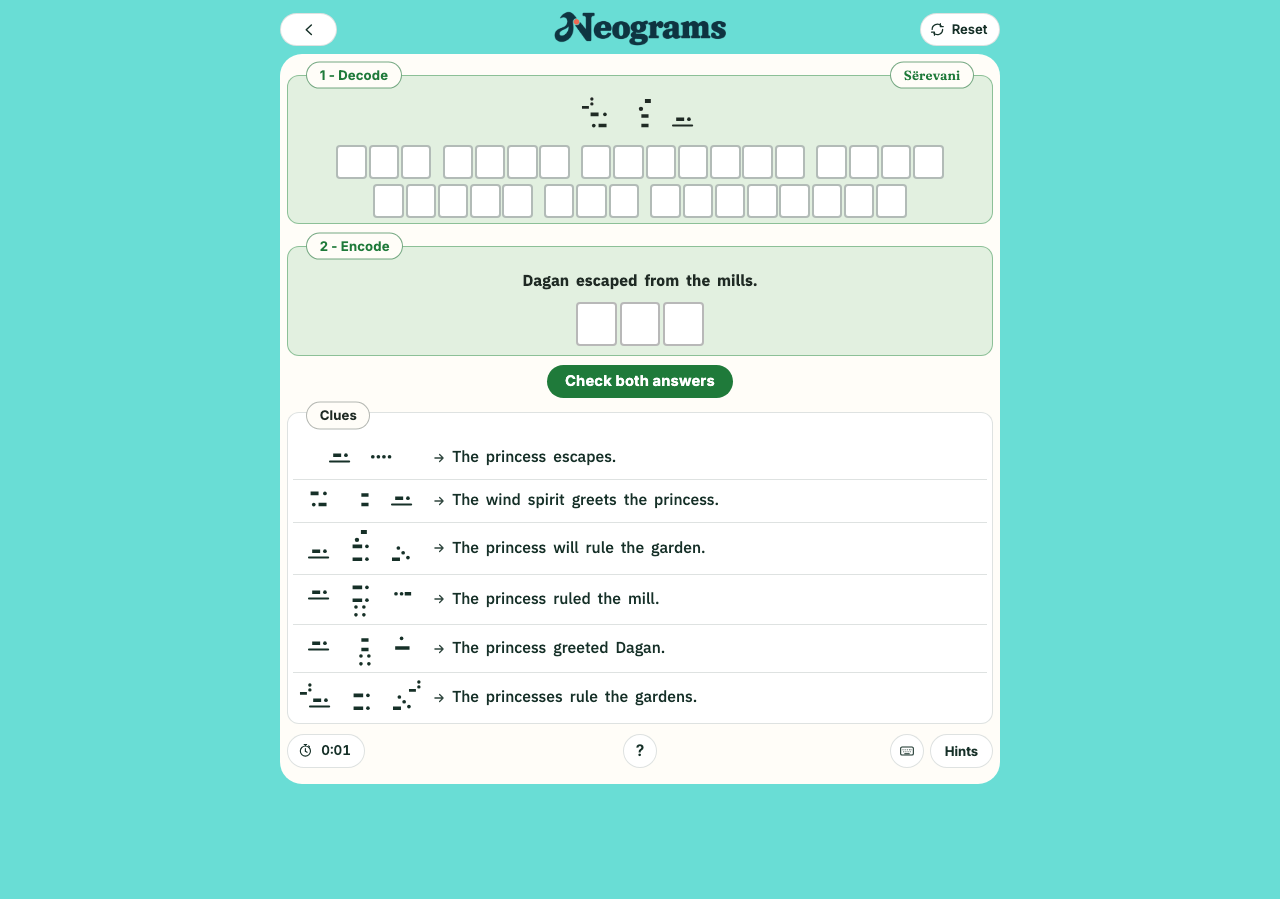
Decode an invented language from translated examples, then write a message back in its symbols.
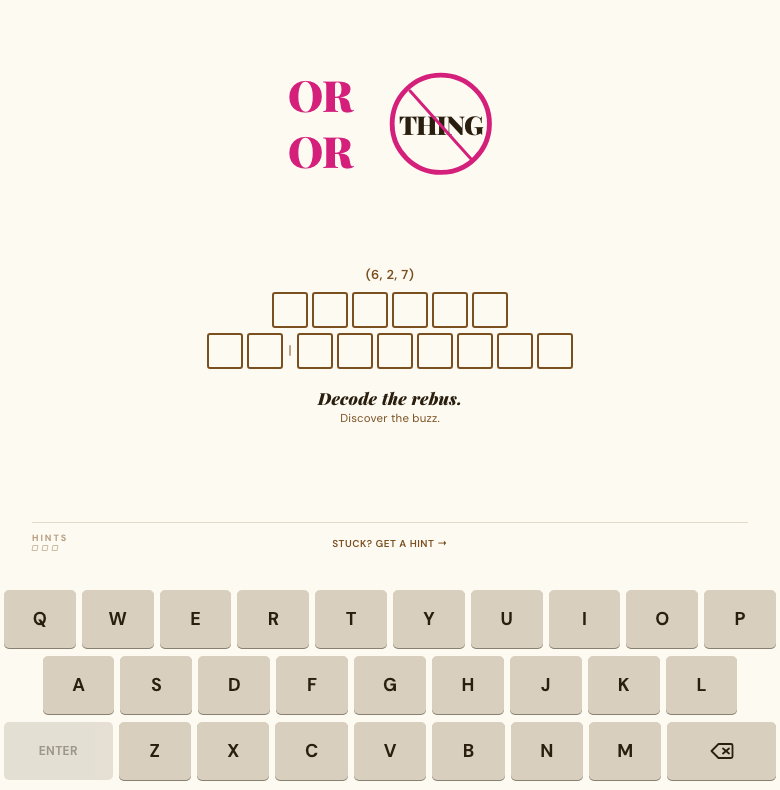
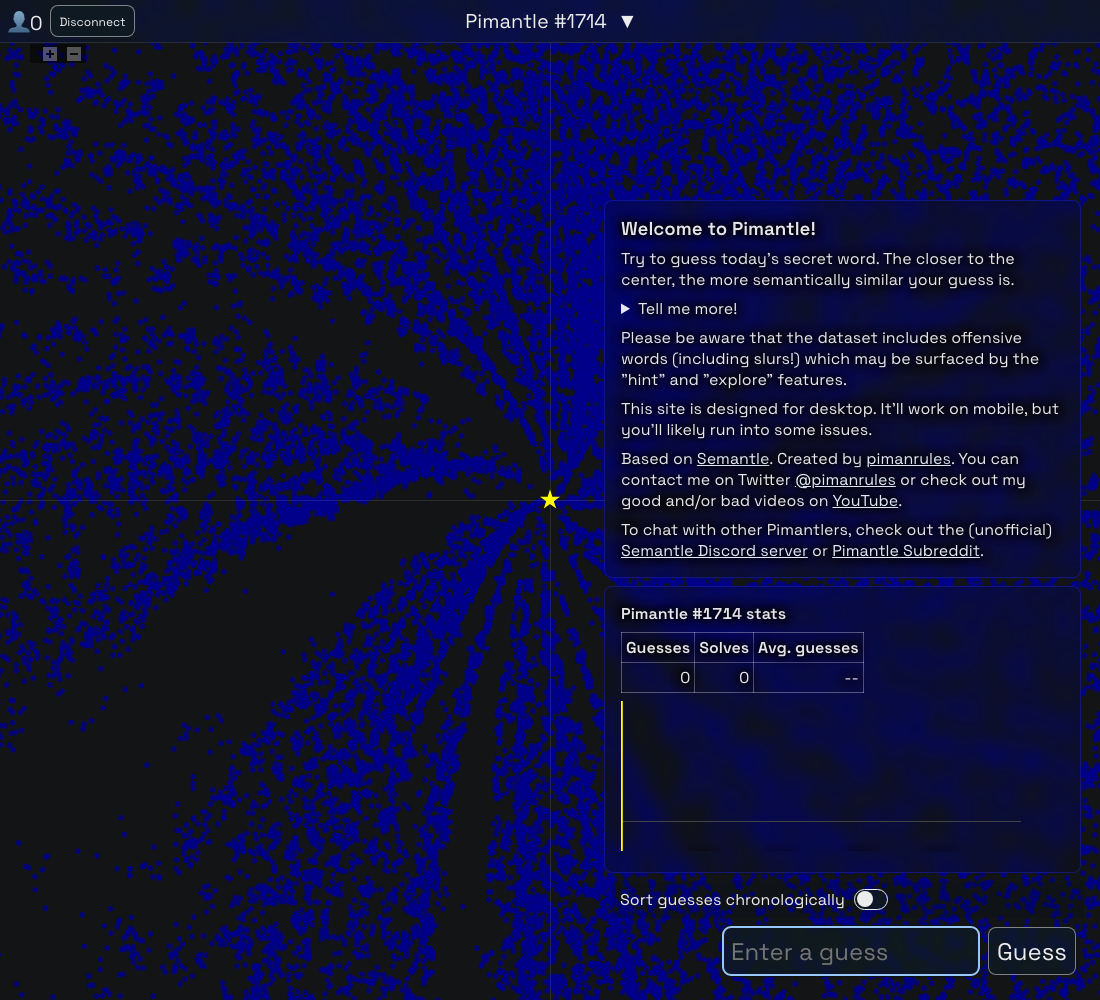
Guess the daily secret word and follow a radial map of how your guesses relate in meaning.
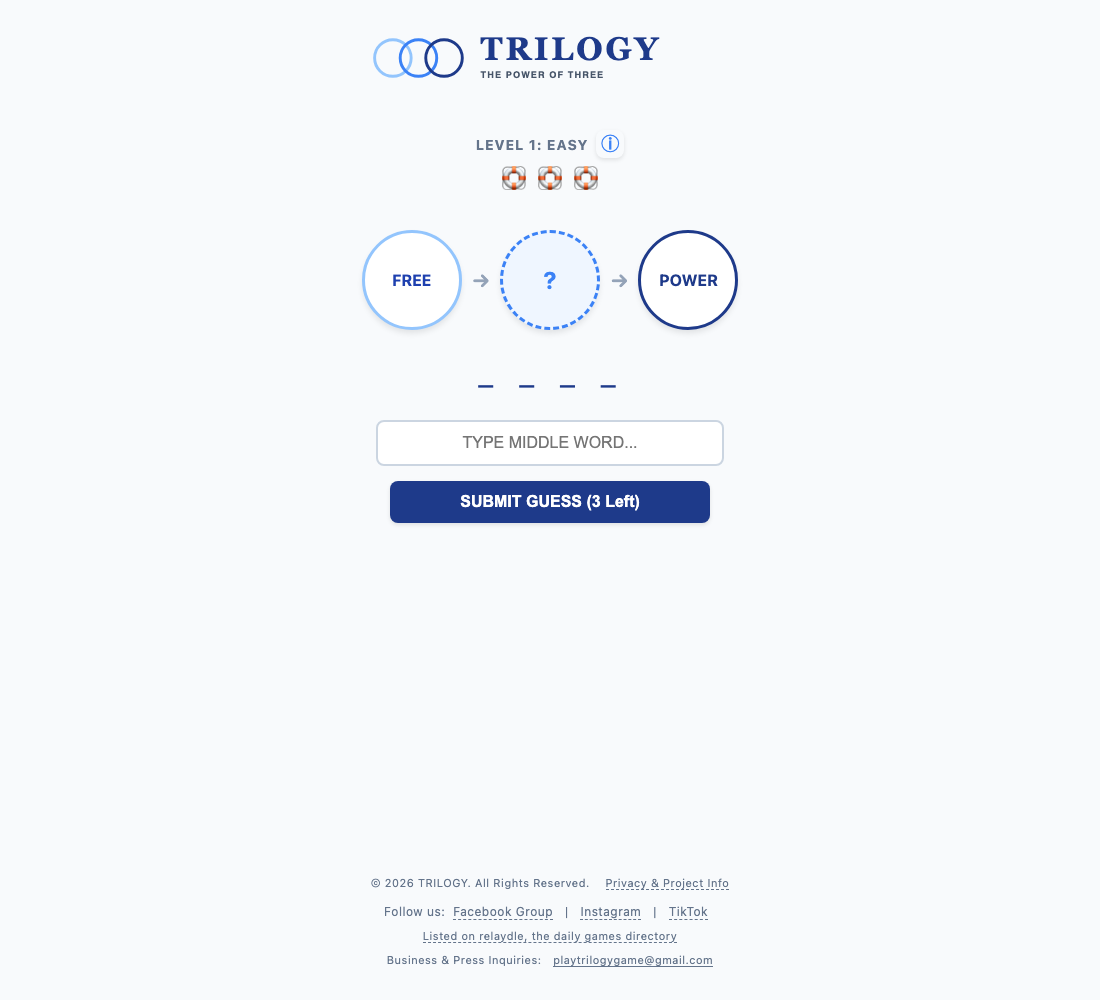
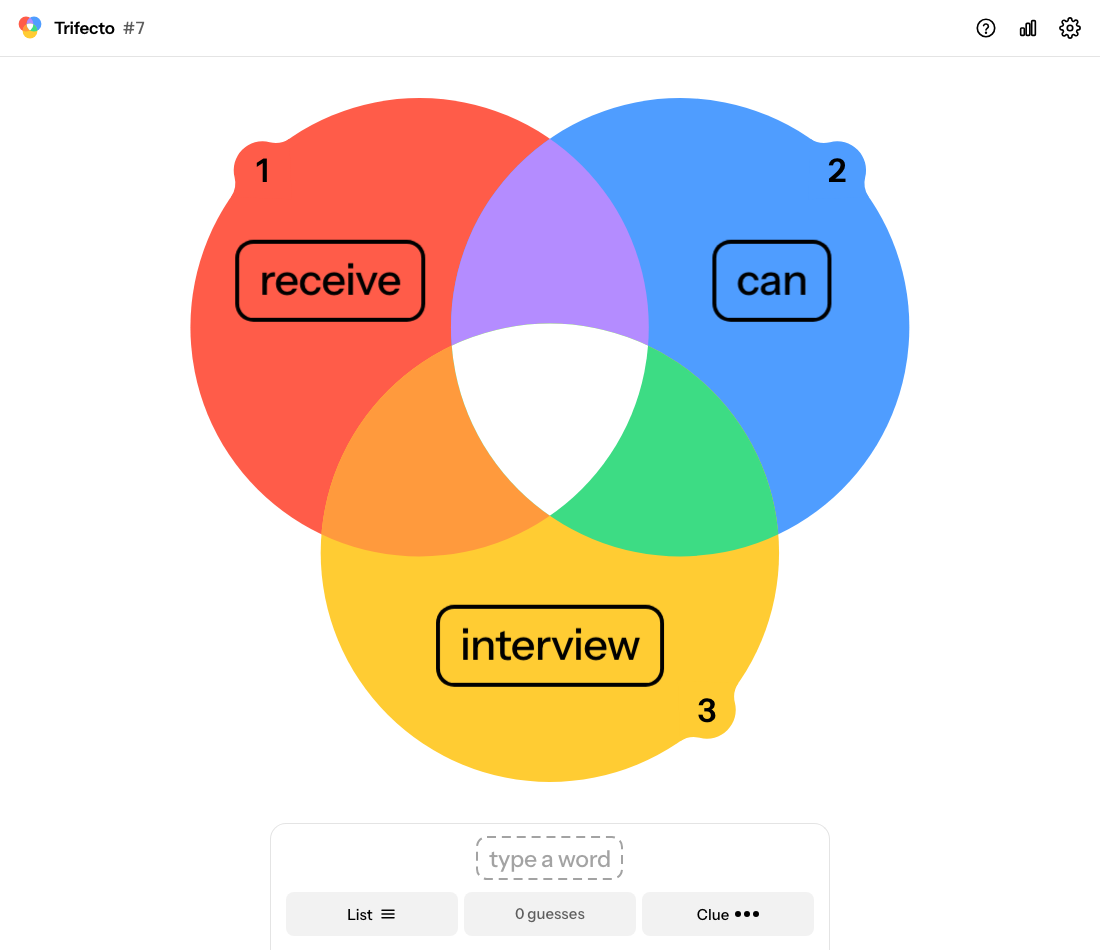
Find the middle word that makes a compound or familiar phrase with each of its neighbors.
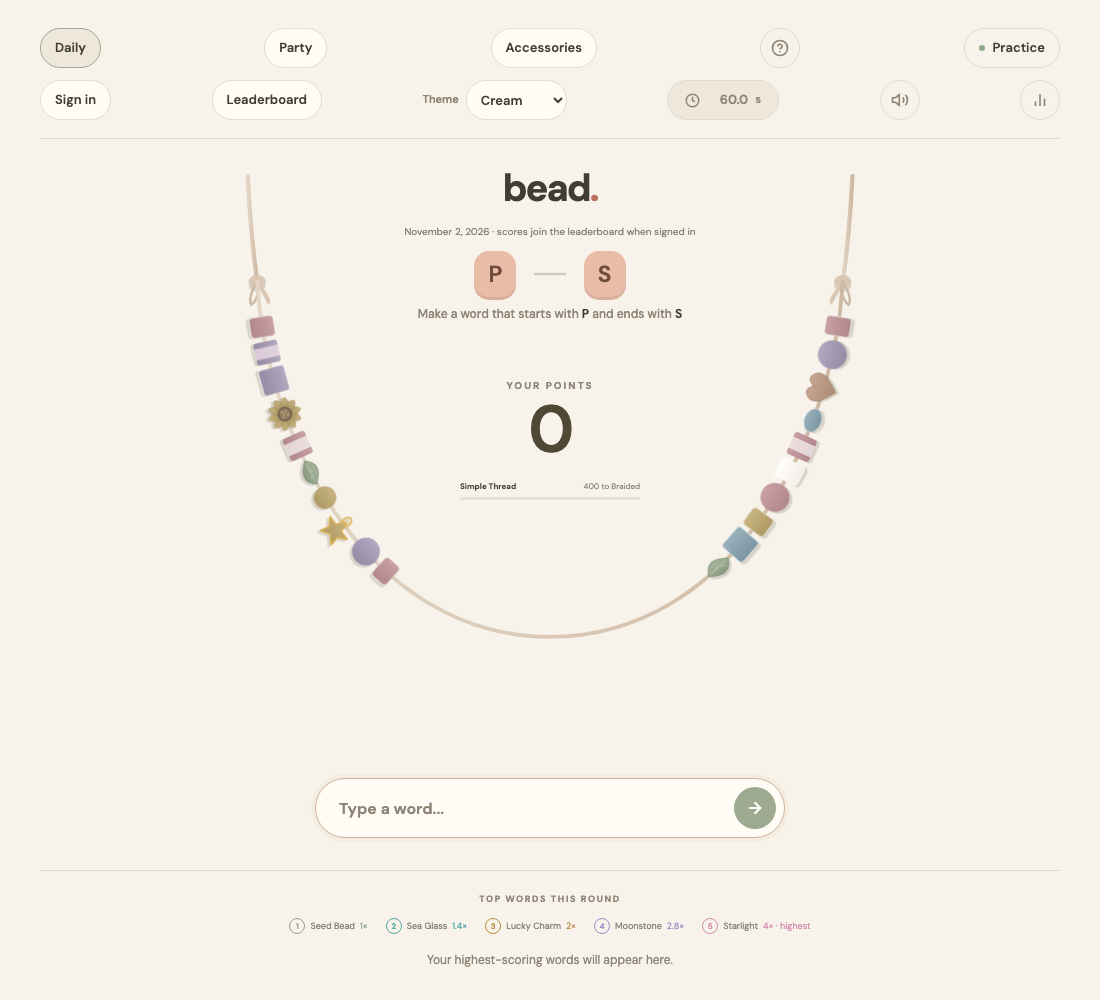
Make as many different words as you can from a shared first-and-last-letter pair in 60 seconds.
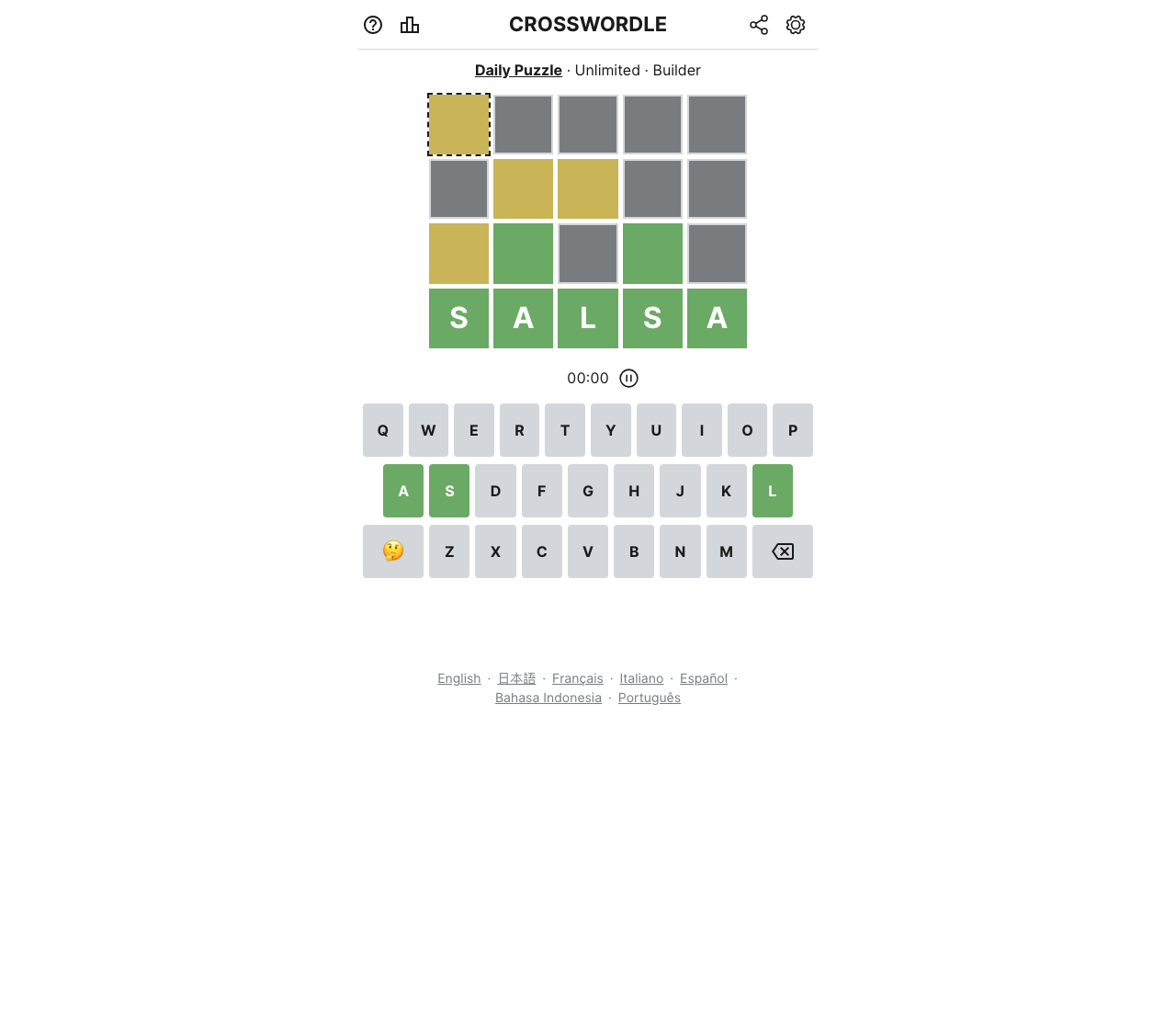
The answer is already filled in. Supply earlier words that obey every green, yellow and gray square.
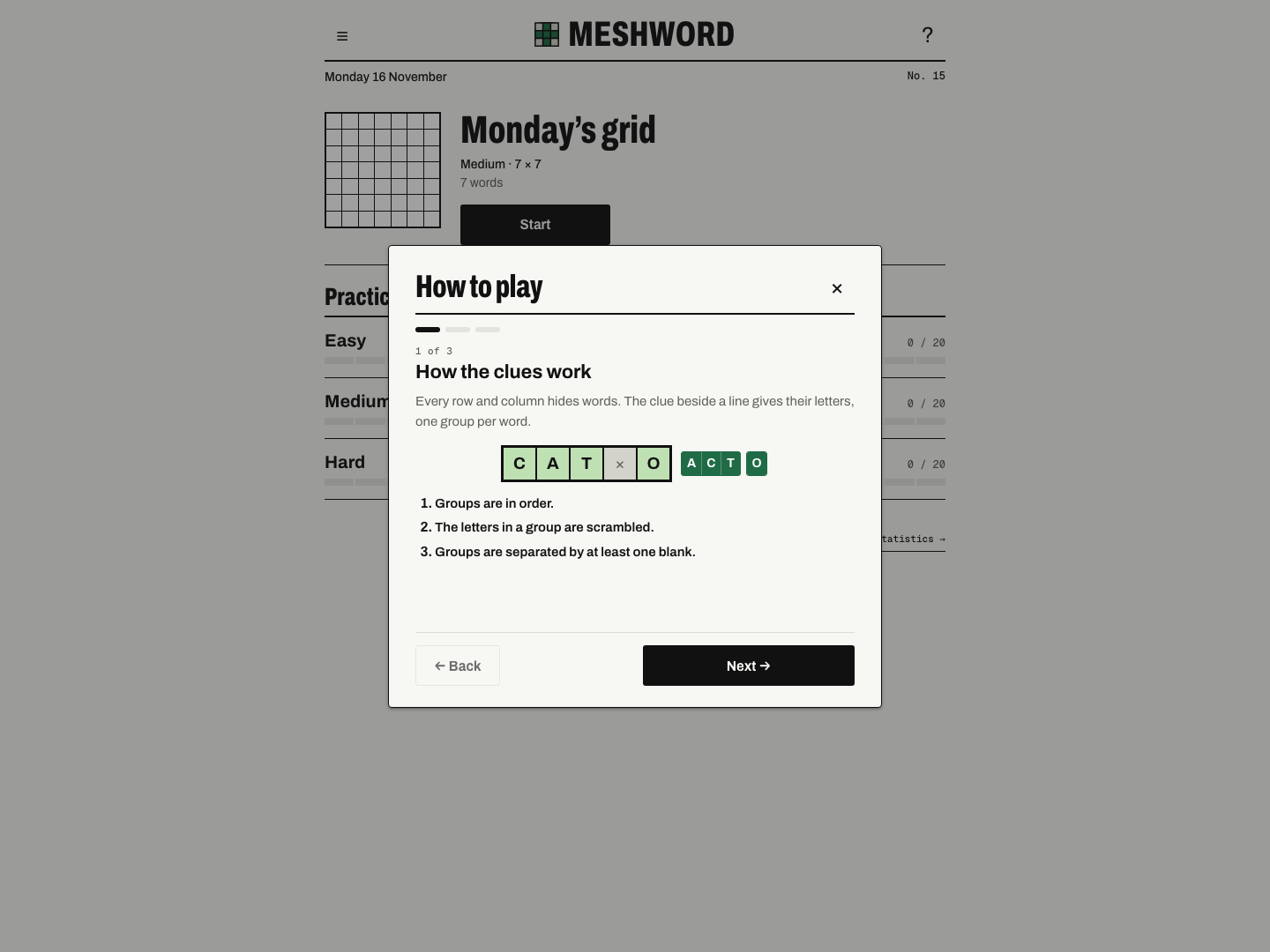
Unscramble the letters beside each row and column to fit crossing words into a shared grid.
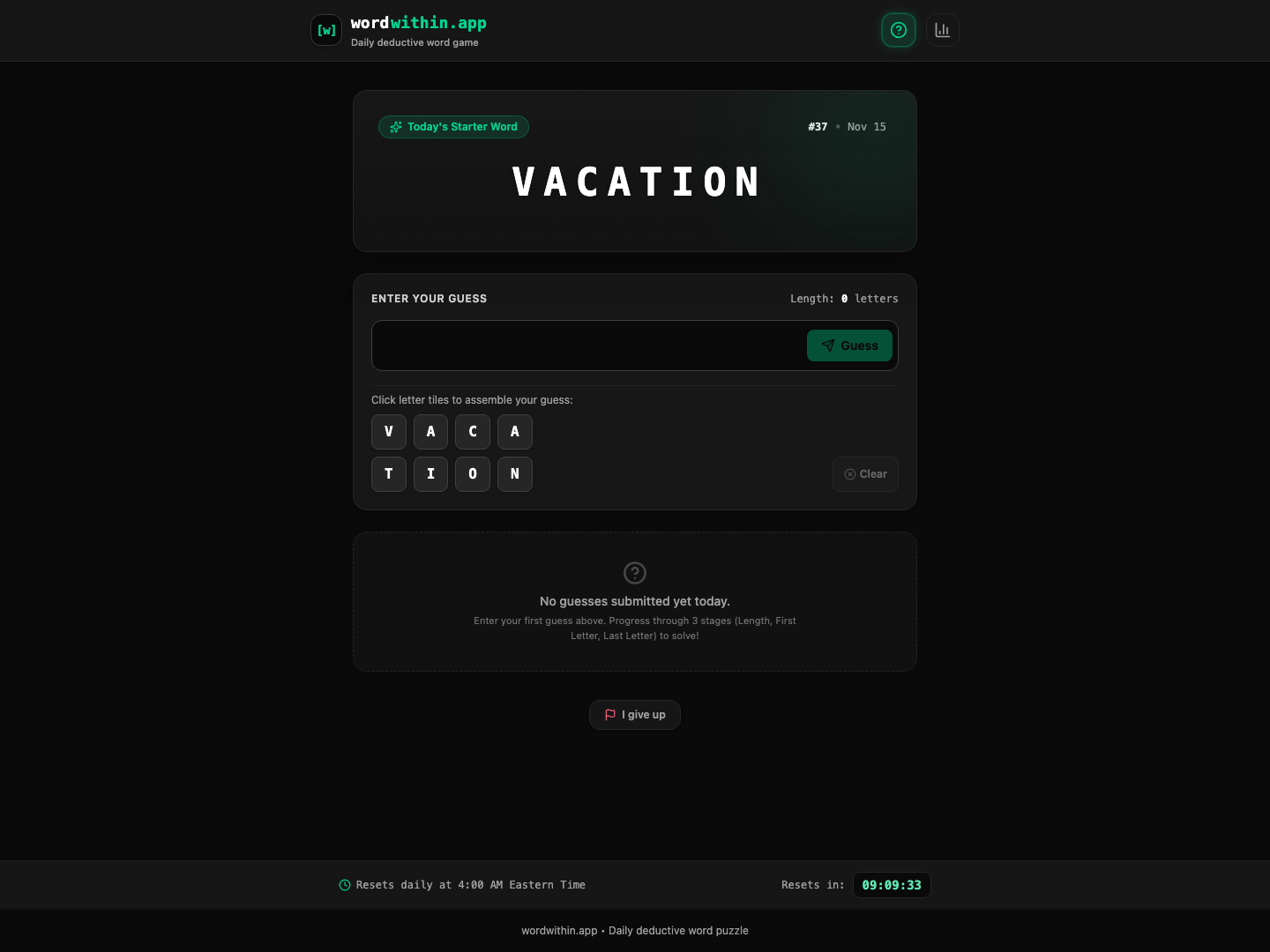
Build guesses from a daily starter word and narrow the hidden answer by length, first letter and last letter.
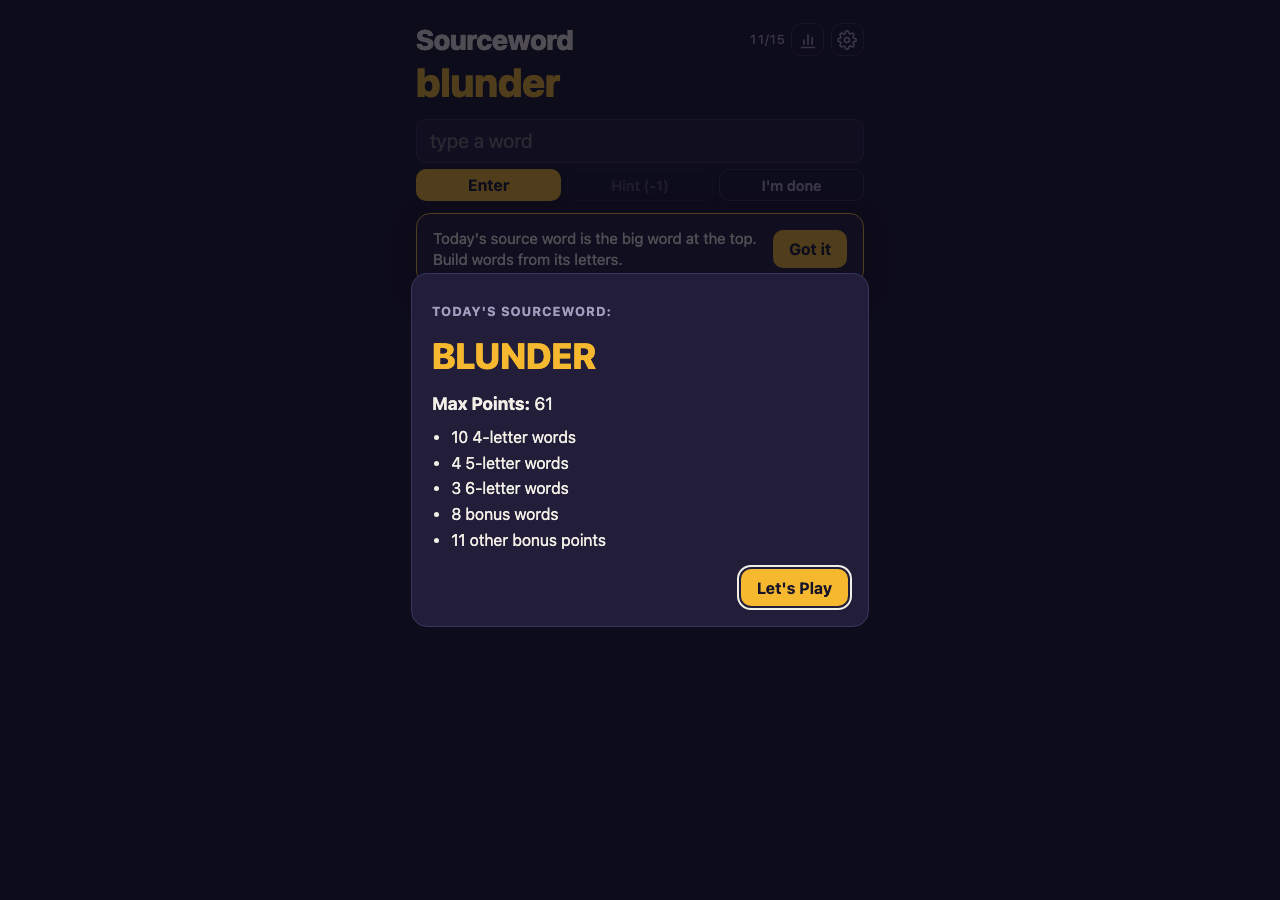
Build words from the letters of a daily source word, respecting its letter counts and hunting for length-based bonuses.
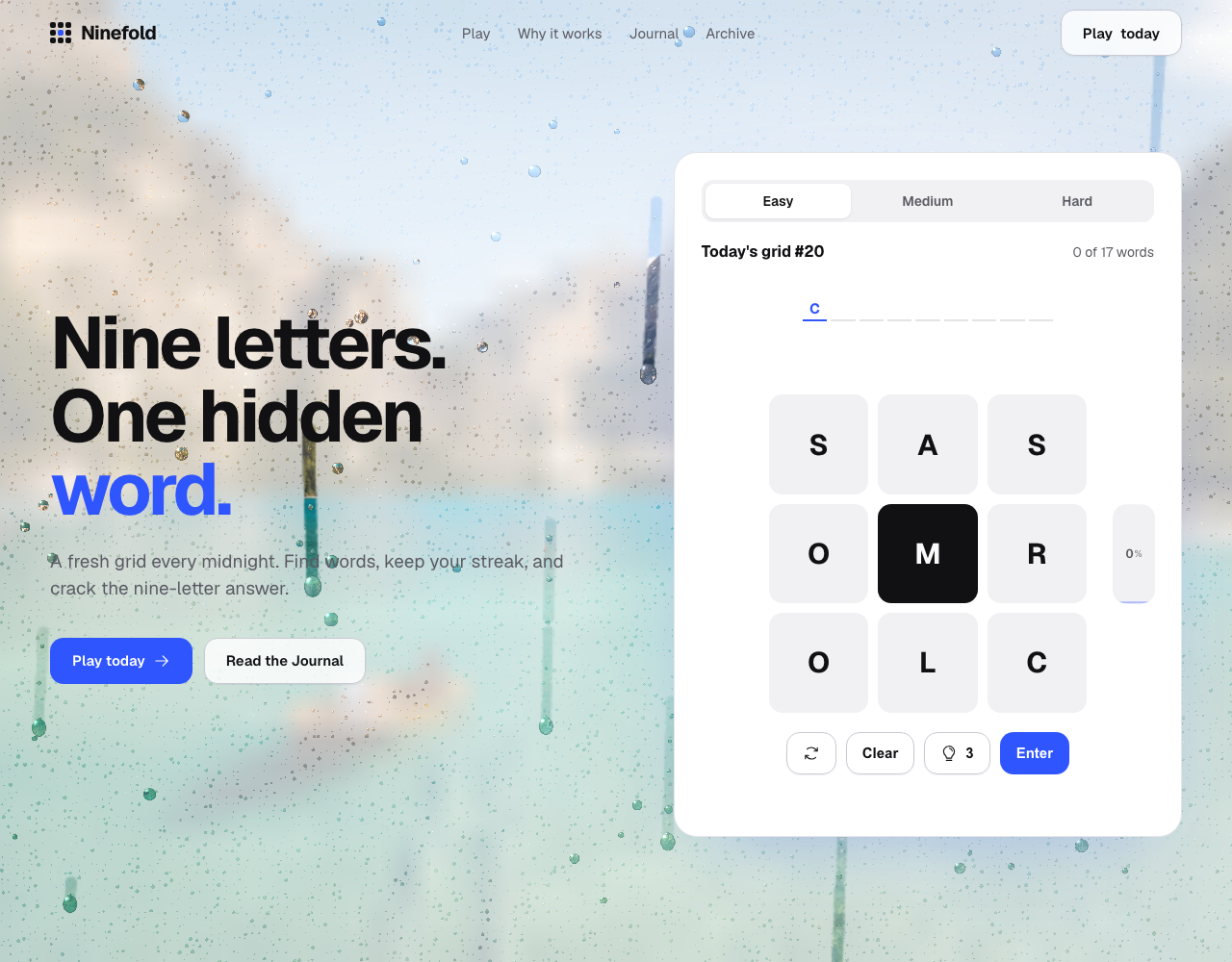
Build words around a required center letter, then find the hidden nine-letter word in a fresh daily 3×3 grid.
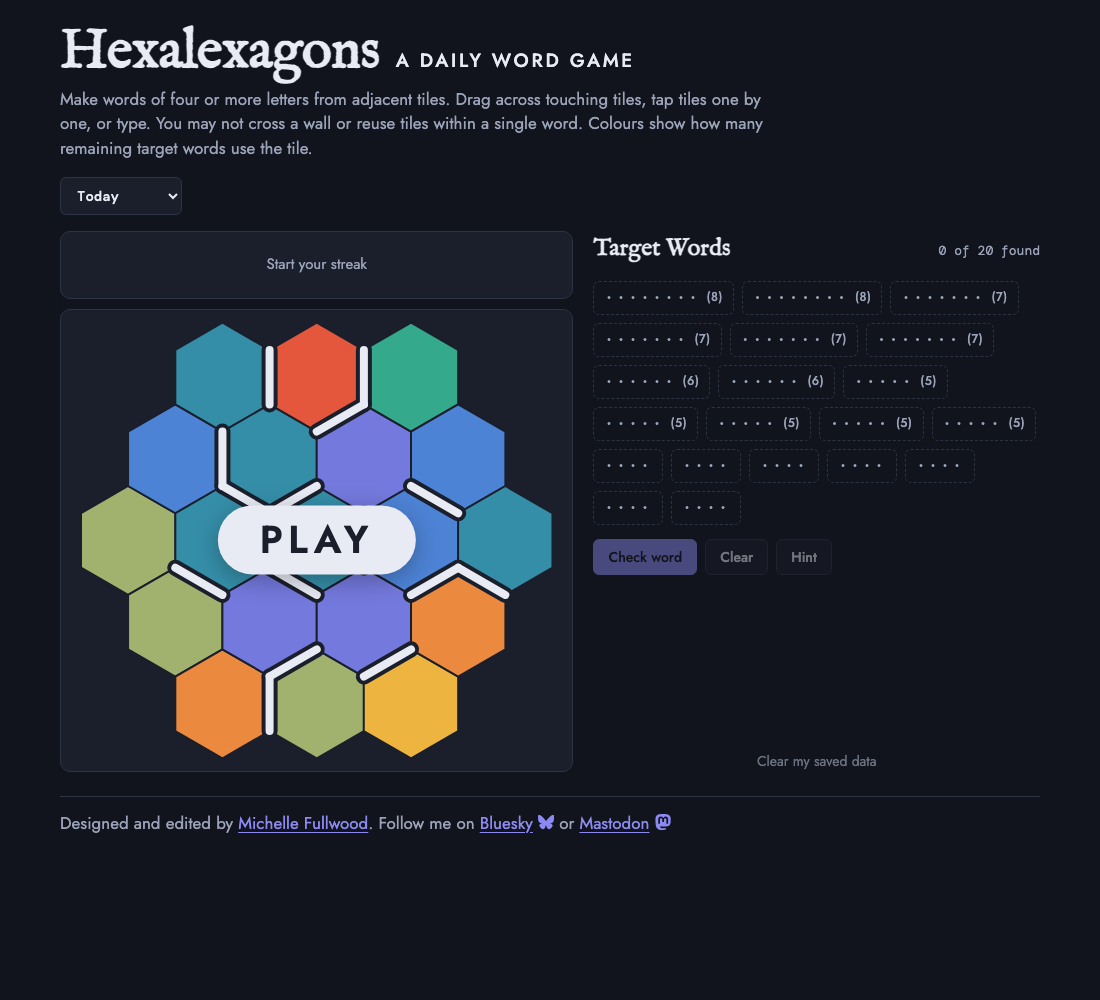
Trace words through neighboring hexagonal tiles without crossing walls or using a tile twice.
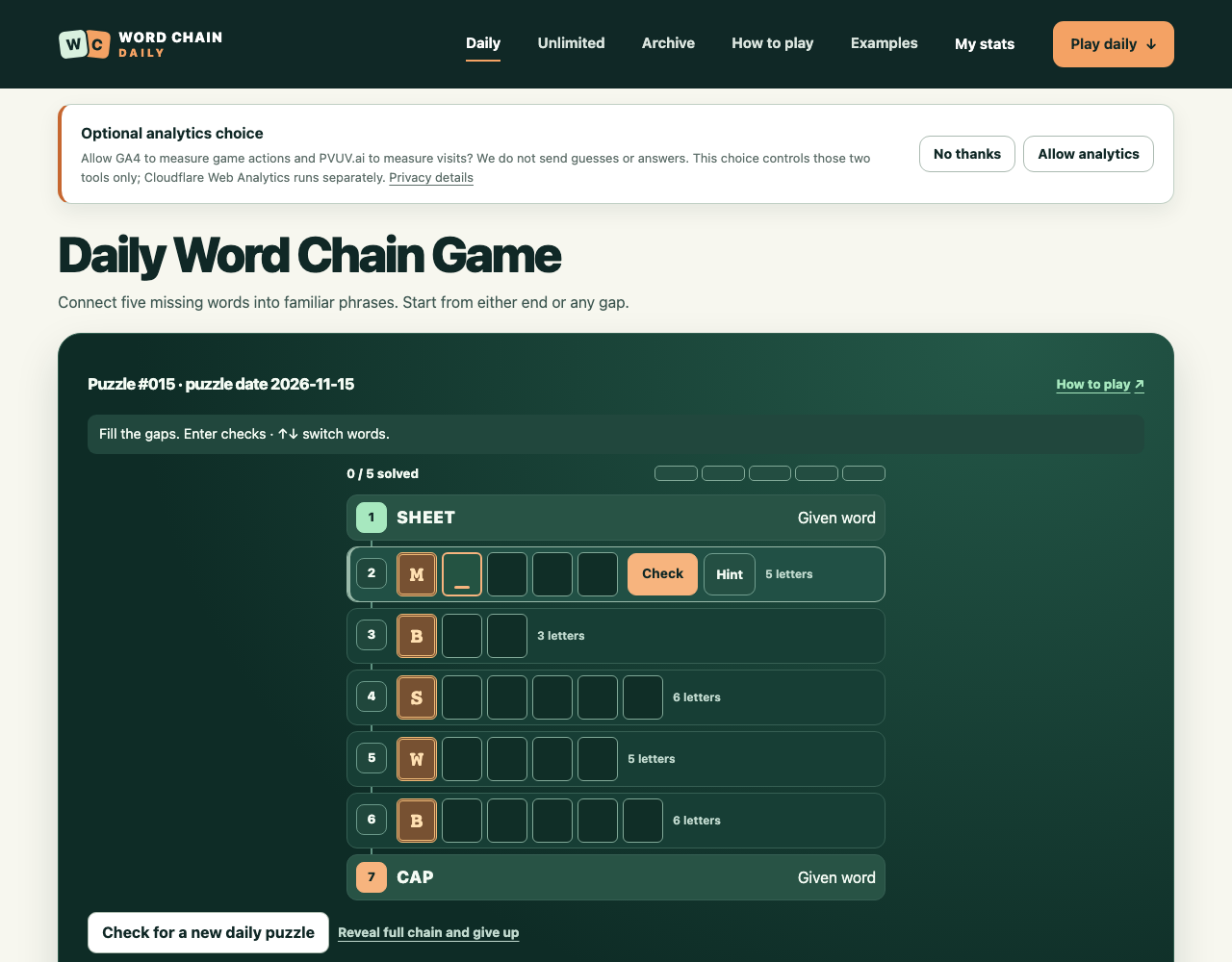
Fill five gaps between two given words so every neighboring pair makes a familiar phrase or compound.
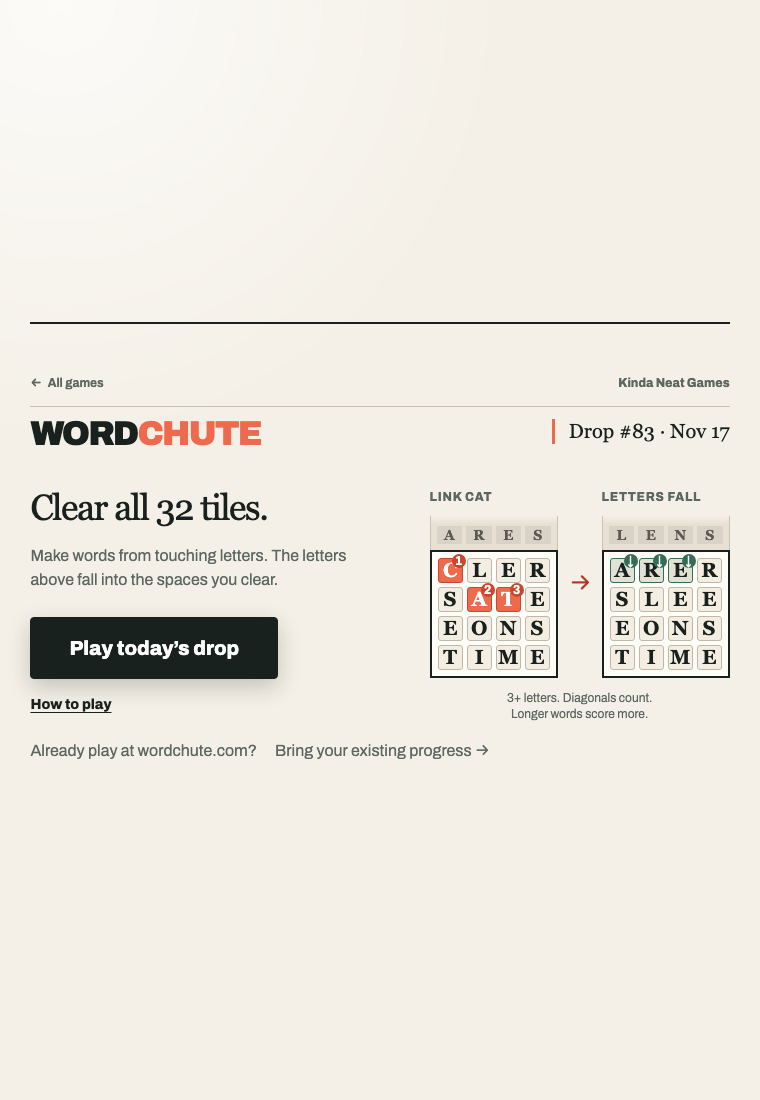
Link words on a small board and plan around the letters that drop into the spaces you clear.
Fill a shared daily seven-by-seven crossword using Across and Down clues, with optional letter hints and friend modes.
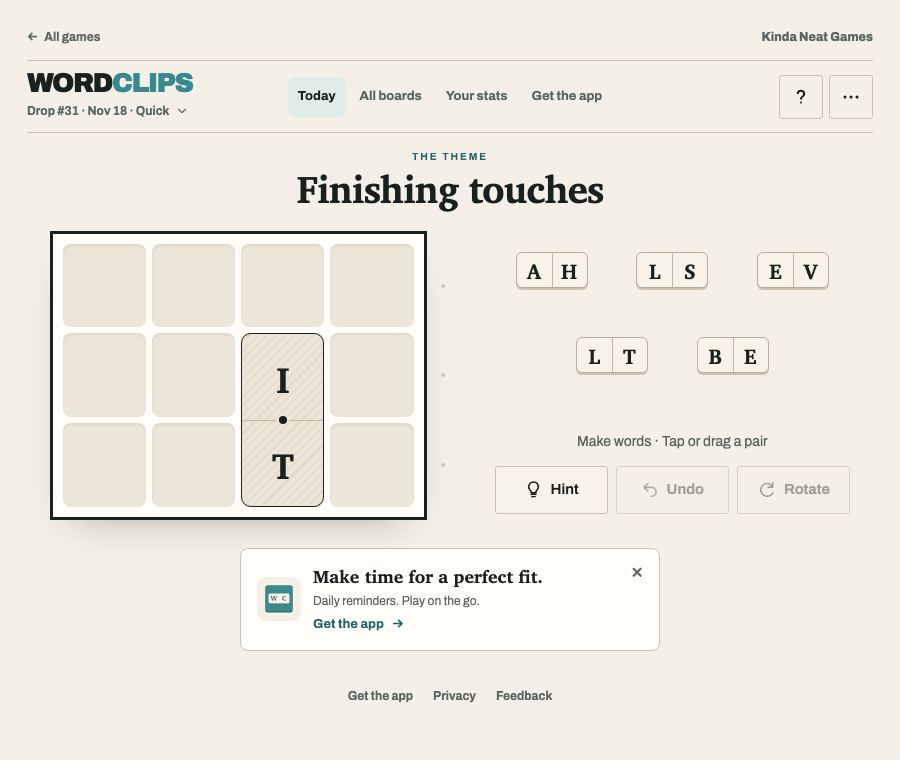
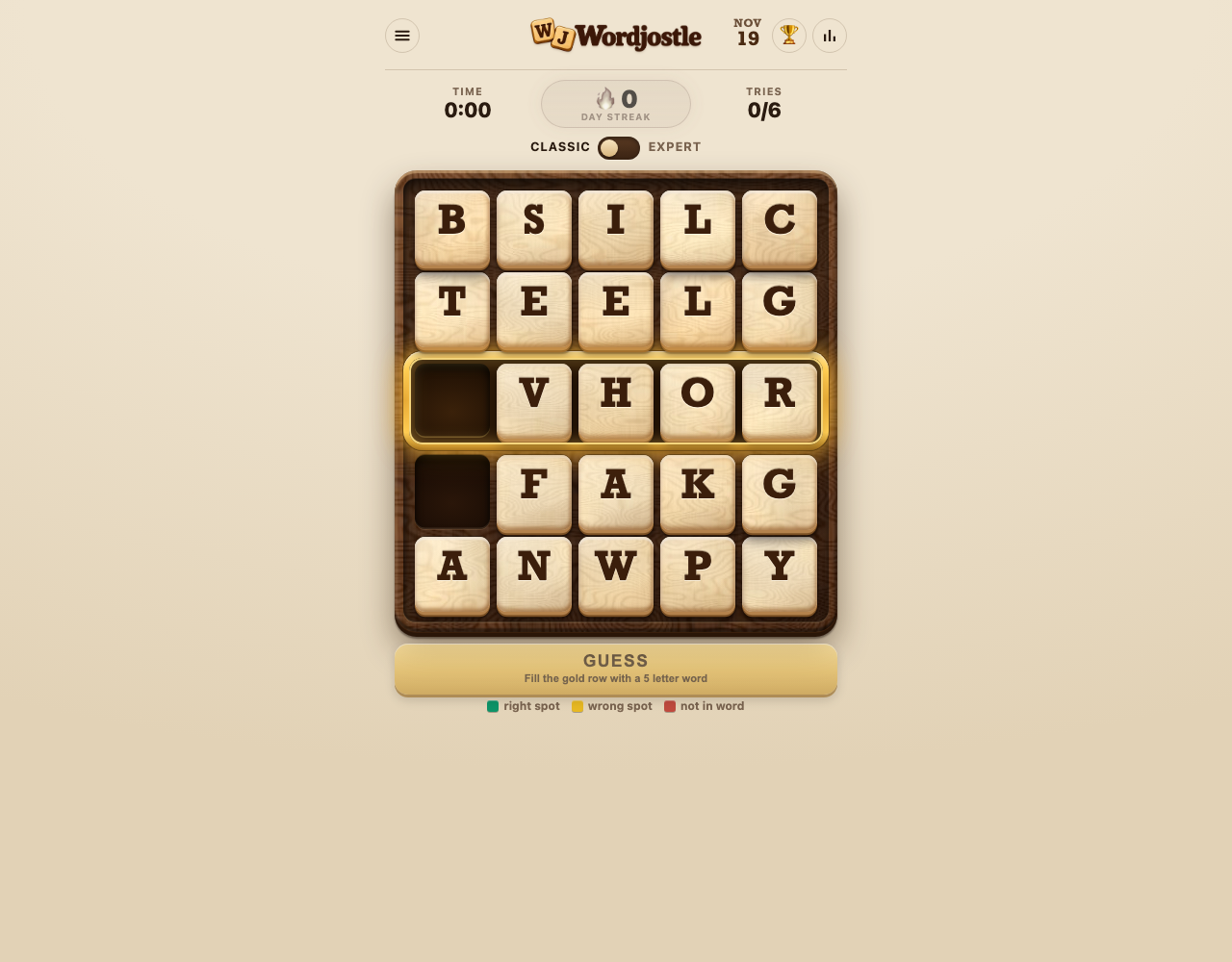
Slide wooden letter tiles to form a five-letter guess in the gold row, then use color feedback to find the daily secret word.
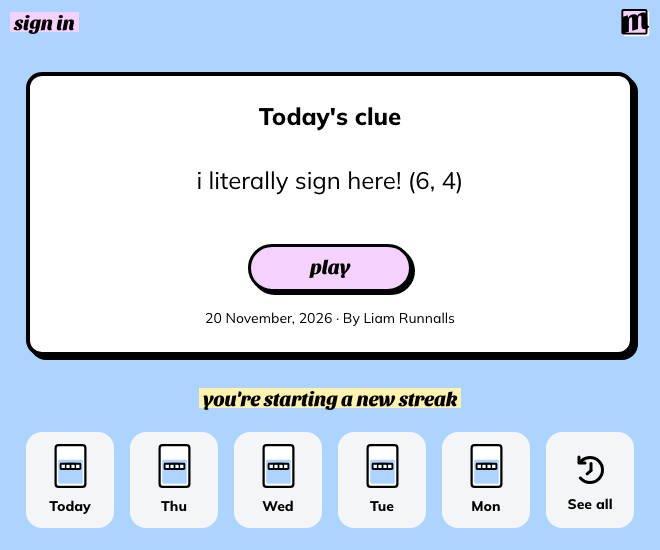
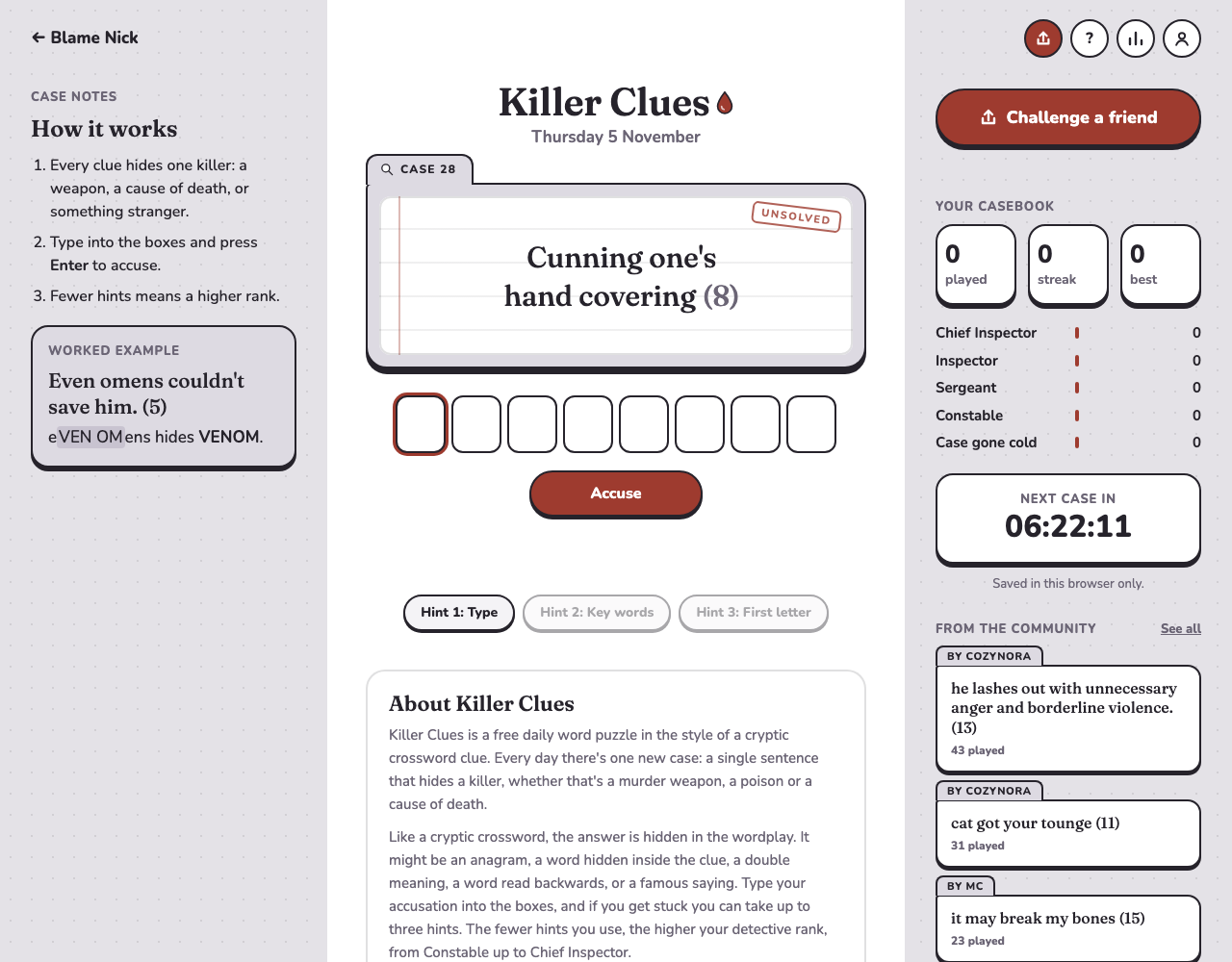
Untangle one daily cryptic crossword clue, with free courses for learning the tricks.
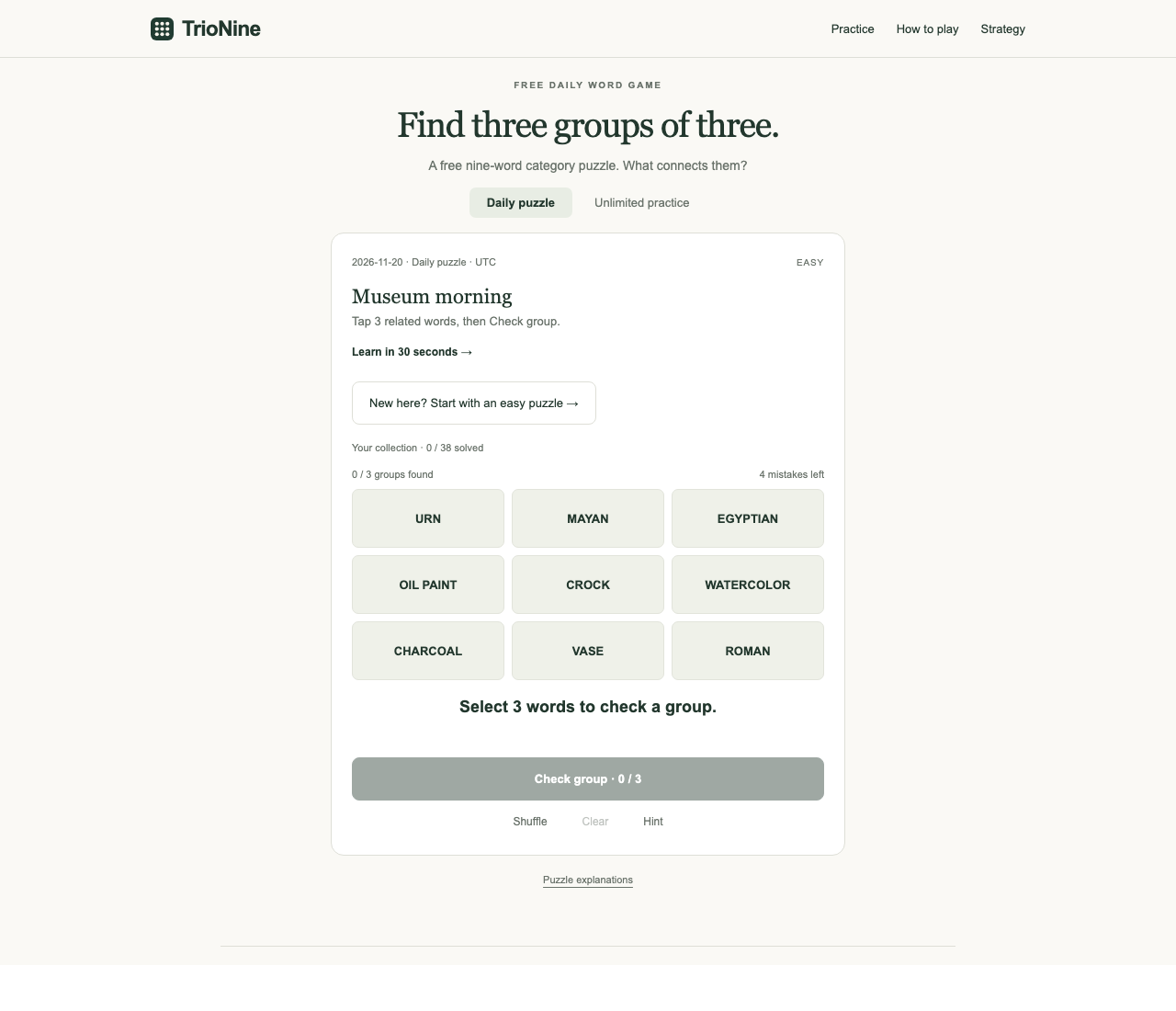
Sort nine words into three connected groups, with four mistakes to spare and explanations for each solved set.
Arrange picture glyphs by their sounds to construct four words or phrases in a shared daily category.
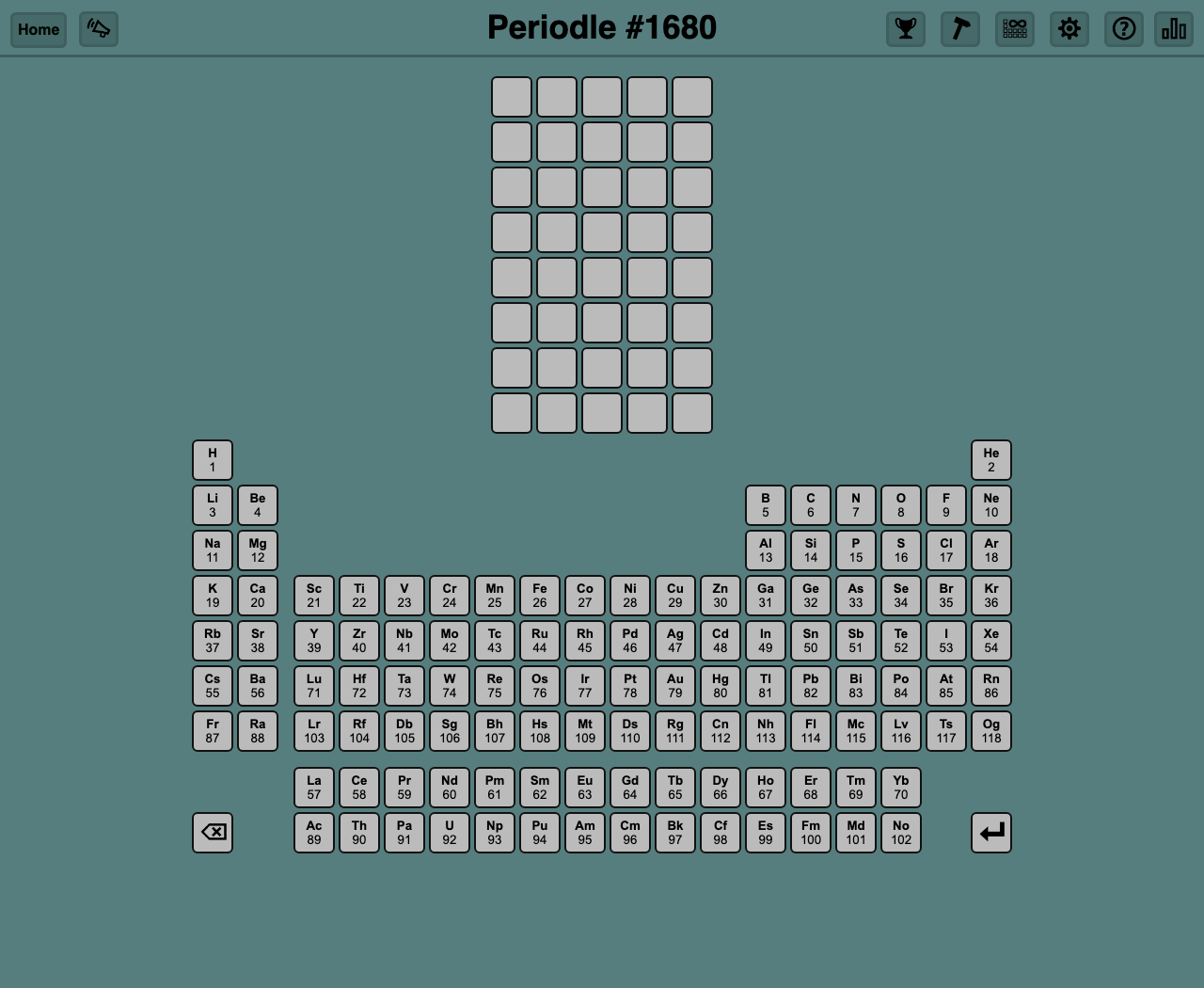
Spell a hidden word using five chemical-element symbols, with eight guesses and an extra orange clue for overlapping letters.
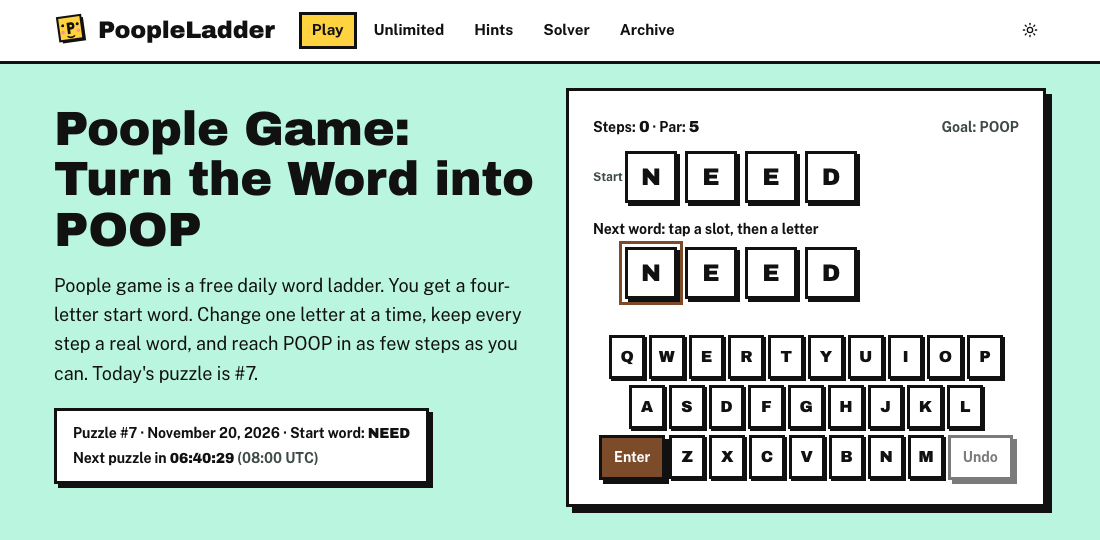
Change one letter per move to turn a daily four-letter starting word into POOP, using valid words along the way.
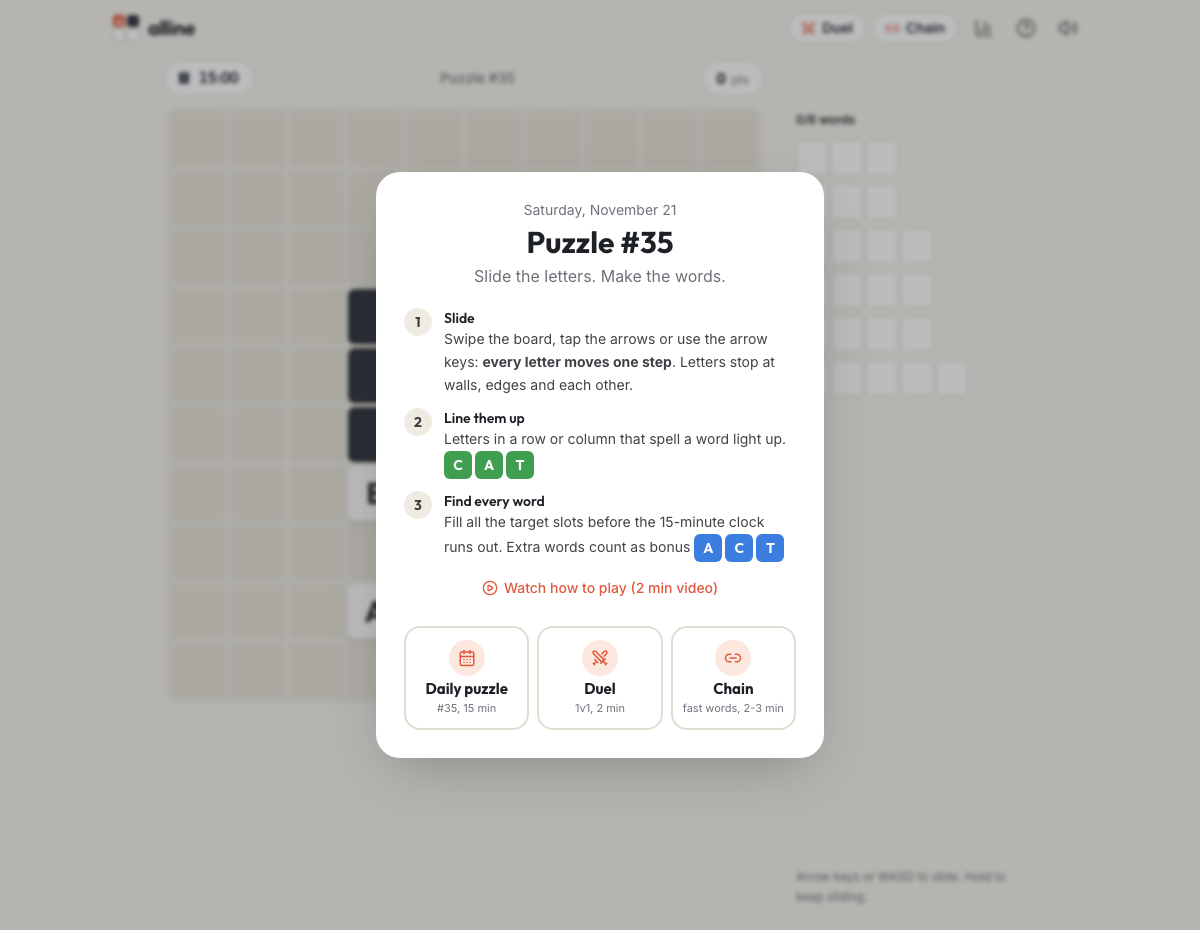
Slide every letter at once, using walls to line up six target words on a shared daily board.
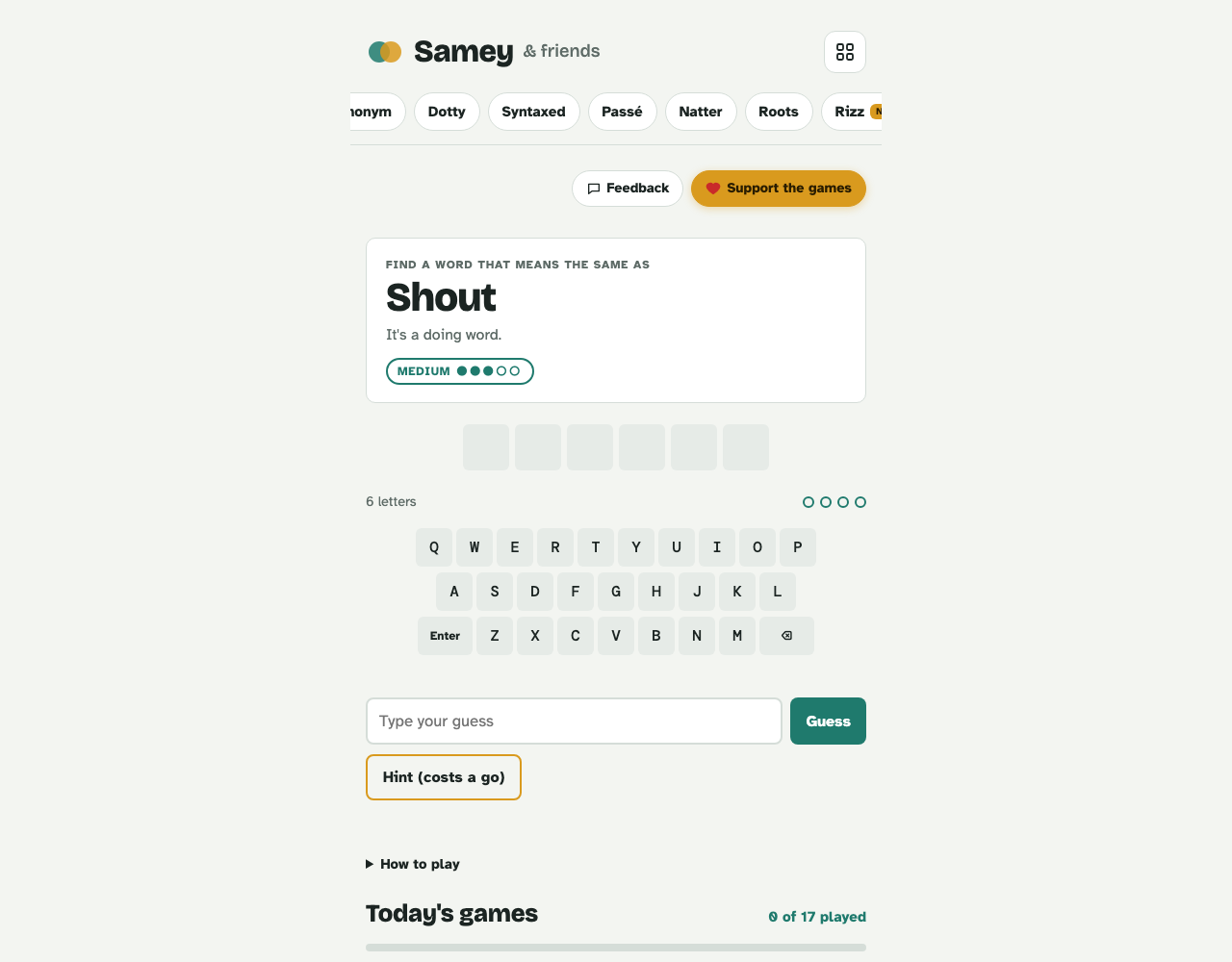
Find a hidden synonym in four guesses, using the clue’s word type and the letters each guess reveals.
Infer a hidden category from three everyday words, testing examples and refining your guess across five artifacts.
Find words on daily 4×4, 5×5 or 6×6 grids, with changing objectives and Pals and Worldwide rankings.
Try another search or turn off the favorites filter.
Word games use letters, vocabulary or meanings as the puzzle material. Daily formats can ask you to uncover a hidden word, fill a crossword, transform one word into another or connect clues through meaning. The daily schedule gives you a new puzzle; it does not imply that every game follows Wordle's rules.
Hidden-word games narrow an answer through feedback on guesses. Crosswords use definitions and intersecting letters. Word ladders require valid steps between words, often changing one letter at a time. Meaning-based puzzles ask for words that connect ideas. Check word length, accepted vocabulary and submission limits, because those constraints differ between formats.
Choose letter-feedback games if you enjoy testing possibilities and tracking positions. Crosswords suit players who like clue interpretation and crossing answers. Ladders emphasize finding a route through valid words, while meaning-based games favor associations and synonyms. Knowing more words helps, but each format uses that vocabulary differently.
Wordly asks you to discover a hidden six-letter word using colored feedback. Poople shows the destination, POOP, and asks you to reach it through accepted four-letter words that change one letter per step. The first is a search for an unknown answer; the second is a route to a known one.